Maskarada i bračna ljubav
In "Masquerade," Moravia satirically depicts fascist Italy through absurd political intrigue and disguise. "Marital Love" intimately explores erotic tension, possessiveness, and emotional alienation in everyday life.
In these two works, Alberto Moravia shows different registers of his creativity – political satire and deep psychological analysis of intimate relationships.
Masquerade (1941) is a satirical, grotesque novel set in fascist Italy. The main character is a police informant who is assigned to seduce and entrap a young woman whose husband is politically undesirable. The plot takes place in an atmosphere of masquerades, lies, disguises and the absurdity of a totalitarian regime. Moravia mercilessly mocks the bureaucracy, corruption, hypocrisy and dehumanization brought about by fascism. At the time of its publication, the novel was banned and confiscated by Mussolini's regime due to harsh criticism.
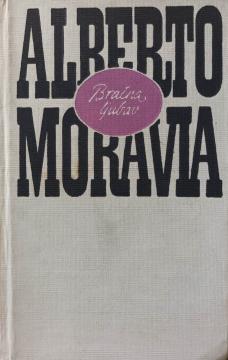
Marital Love (1949) is a more subtle, intimate prose – a collection of stories or a short novel focused on a married couple. The wife is a beautiful, sensual woman who becomes the object of her husband's obsessive desire and jealousy. He is an intellectual who is simultaneously attracted to and threatened by her physicality and independence. The work dissects erotic dynamics, possessiveness, fear of loss, feelings of guilt and the impossibility of completely possessing another. Here Moravia demonstrates mastery in depicting subtle psychological nuances – from passion to coldness, from tenderness to destructive control. The marital relationship becomes a battlefield of identity, power and desire.
Both texts are characterized by Moravia's typical theme – a man trapped in false roles (social or intimate), the impossibility of authentic communication and the constant struggle between appearance and essence. "Masquerade" is sharper, politically engaged, while "Marital Love" goes deeper into the erotic-psychological sphere. Together they show the breadth of Moravia's oeuvre – from social criticism to the most intimate corners of the human soul.
Im Angebot sind keine Exemplare vorhanden
Das letzte Exemplar wurde kürzlich verkauft.