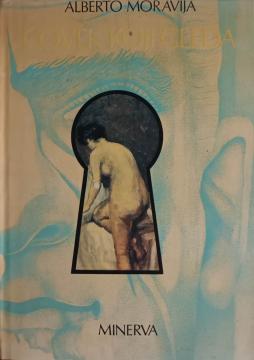
Čovek koji gleda

Čovek koji gleda

Alberto Moravia
Original title
L' uomo che guarda
Translation
Dragoslav Nikolić Micki
Editor
Milivoje Marković
Dimensions
20 x 14.5 cm
Pages
169
Publisher
Minerva, Subotica, 1988.
 
Distribution: 5,000 copies
 
Latin alphabet. Hardcover with dust jacket.
Language: Serbian.
ISBN
8-67-099050-4

One copy is available

Condition:Used, very good condition
Damages or inconvenience notice:
  • Signature of previous owner
  • Traces of patina
 

Are you interested in another book? You can search the offer using our search engine or browse books by category.

You may also be interested in these titles

Automat

Automat

Alberto Moravia
Otokar Keršovani, 1966.
Croatian. Latin alphabet. Hardcover.
3.99
Pažnja

Pažnja

Alberto Moravia
Otokar Keršovani, 1966.
Croatian. Latin alphabet. Hardcover.
3.99
Drugi kraj konca

Drugi kraj konca

Andrea Camilleri

The Other End (2016) is part of the Inspector Salvo Montalbano series. Set in the fictional Sicilian town of Vigàtu, the novel combines criminal intrigue with the current topic of the migration crisis, with Camilleri's signature humor.

Profil Knjiga, 2017.
Croatian. Latin alphabet. Paperback.
8.34
Lažljivi život odraslih

Lažljivi život odraslih

Elena Ferrante

The Lying Life of Adults (2019), a stand-alone novel by Elena Ferrante, takes us to Naples in the 1990s through the eyes of fourteen-year-old Giovanna Trade, a bright, middle-class girl whose world falls apart with the discovery of her family's lies.

Profil Knjiga, 2020.
Croatian. Latin alphabet. Paperback.
15.62
Pismo nerođenom djetetu

Pismo nerođenom djetetu

Oriana Fallaci

One of the most moving and courageous works of world literature of the 20th century. Written as a long monologue by a pregnant woman (Fallaci herself), the book is at once an intimate confession, a feminist manifesto, and a philosophical confrontation wit

Znanje, 2009.
Croatian. Latin alphabet. Paperback.
4.56
U sjeni bregova

U sjeni bregova

Paola Drigo

The novel depicts the tragic fate of Mariuta (Marije Zef) and her younger sister Rosuta. The work shocked contemporaries with its boldness in depicting taboo subjects, and is today considered a classic portrait of female suffering in rural Italy.

Matica hrvatska, 1961.
Croatian. Latin alphabet. Hardcover with dust jacket.
5.32