Friedrich Engels
Friedrich Engels (1820–1895) took on the sort of editorial job few people would accept without asking where the rest of the manuscript was. After Karl Marx died, Engels was left with drafts from different periods, some unfinished and much of it hard to read. Before the second and third volumes of Capital (Das Kapital) could reach readers, he had to work out whether a page that didn’t fit belonged to another chapter or another decade.
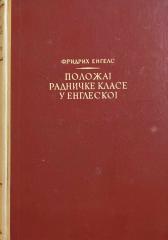
Engels was born in Barmen, now part of Wuppertal, into a family of textile manufacturers. In 1842 he went to Manchester to work in the family firm. There he met Mary Burns, an Irish worker who helped him get to know the city’s working-class districts. In The Condition of the Working Class in England (Die Lage der arbeitenden Klasse in England, 1845), he wrote about wages, housing, disease and factory work. Industrial progress looks different from a street where a single wage has to feed a whole family.
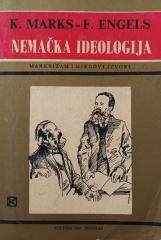
His close collaboration with Marx began in 1844. They wrote The German Ideology (Die deutsche Ideologie, 1845–1846) and The Communist Manifesto (Manifest der Kommunistischen Partei, 1848). Engels supported Marx financially for years and moved from Manchester to London in 1870. In Anti-Dühring (Herrn Eugen Dührings Umwälzung der Wissenschaft, 1878), he set out his views on philosophy, economics and socialism. In The Origin of the Family, Private Property and the State (Der Ursprung der Familie, des Privateigentums und des Staats, 1884), he asked how changes in ownership and inheritance had shaped families and political authority.
Engels published the second volume of Capital in 1885 and the third in 1894, a year before he died in London. Readers who know him as the editor of those hefty volumes will meet another side of him in his book on England. One street is enough for him to show what’s at stake in an argument about industry. He could put two volumes together from scattered pages. To get started on a book of his own, he knew where to go on foot.
Titles in our offer