Wilhelm Windelband
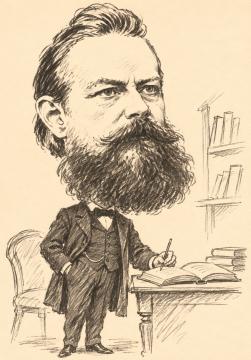
Wilhelm Windelband (Potsdam, 11 May 1848 – Heidelberg, 22 October 1915) was a German philosopher and historian of philosophy, regarded as the founder of the Baden, or Southwest German, school of Neo-Kantianism. He studied in Jena, Berlin and Göttingen, where Hermann Lotze significantly influenced his thinking. His academic career included professorships in Zurich, Freiburg, Strasbourg and Heidelberg.
Reinterpreting Kant, Windelband focused on values, validity and the justification of knowledge. He distinguished descriptions of what happens from questions concerning what is valid or ought to be. Logical truth and moral norms, in his account, cannot be reduced to psychological facts about how people actually think or behave.
His best-known distinction is between nomothetic and idiographic inquiry, formulated in Geschichte und Naturwissenschaft (1894). Nomothetic inquiry seeks general laws; idiographic inquiry examines individual, unrepeatable events. The distinction concerns the aims and methods of investigation rather than merely separating fields by subject matter. It became influential in debates about historical scholarship and the cultural sciences.
His major publications include Geschichte der neueren Philosophie (1878–1880), the essay collection Präludien (1883), Geschichte der alten Philosophie (1888), Lehrbuch der Geschichte der Philosophie (1892) and Einleitung in die Philosophie (1914). As a historian, he organised philosophical thought around the development of problems and concepts, placing thinkers within their intellectual settings.
Heinrich Rickert was an important successor to his work. Windelband’s legacy encompasses value theory, scientific methodology and philosophical historiography. His investigations into facts and values, justification and explanation, and the general and the individual remain significant for understanding the distinctive purposes of historical and humanistic inquiry.
Titles in our offer