Romain Rolland
French writer (Clamecy, January 29, 1866 – Vézelay, December 30, 1944), attended the École normale supérieure, graduated in philosophy, received a doctorate in musicology at the Sorbonne, where he founded the chair of music history. He collected plays in two cycles: The Theater of the Revolution (Le Théâtre de la révolution, 1909), which consists of plays about the French Revolution (e.g. Wolves - Les Loups, 1898; Danton, 1899), and Tragedies of Faith (Les Tragédies de la foi, 1909). Rolland's preoccupation with the heroic came to a special expression in his romanticized biographies of famous artists: Michelangelo (Michelangelo's life - Vie de Michel-Ange, 1906), L. N. Tolstoy (Tolstoy's life - Vie de Tolstoï, 1911) and especially L. van Beethoven (Beethoven's life – Vie de Beethoven, 1903; Goethe et Beethoven, 1930; The Unfinished Cathedral – La Cathédrale interrompue, 1943–45). He also wrote biographies of G. F. Händel and H. Berlioz. With a detailed insight into the cultural and political context, he emphasized the importance of an intuitive-emotional experience of music. His best known work is Jean-Christophe (1904–12), an extensive cyclical novel in 10 volumes. It is a paradigmatic example of the so-called the novel of the river (roman-fleuve), the epic momentum in portraying the spiritual climate of the period (the decade before World War I) and the poetic tone, with a romantically designed hero - a creative genius (musician), who is inspired by the love of life in numerous crises. After a burlesque novel in the spirit of F. Rabelais Colas Breugnon (1919), he returned to the novel of the river with a work in 7 volumes, The Enchanted Soul (L'Âme enchantée, 1922–33), with a heroine who strives for spiritual freedom. He also wrote numerous essays; his pacifist pamphlet Above the Sacred (Au-dessus de la mêlée, 1914) caused fierce controversy. Since the 1920s, he has been intensively engaged in Indian philosophy and religion. The introspective autobiographical prose Inner Life (Le Voyage intérieur, 1942), Memoirs (Mémoires, 1956), diaries and rich correspondence (with Ch. Péguy, P. Claudel, S. Freud, S. Zweig, H Hesse, R. Tagore). Winner of the Nobel Prize for Literature in 1915.
Titles in our offer
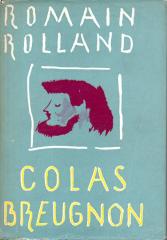
Colas Breugnon
"Colas Breugnon" is a charming romance of life in Burgundy three hundred years ago. It is an "autobiographical" novel, the story being told in the first person by Colas, who reviews his fifty years of life, and describes all its joys and sorrows.
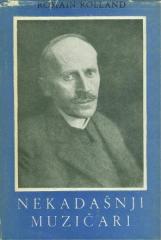
Nekadašnji muzičari
The book provides an overview of the development of music with a special emphasis on opera creativity.
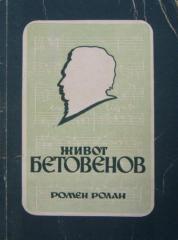
Život Betovenov
The translation of this book was originally published in 1923 by the Belgrade bookseller S. B. Cvijanović, but the entire edition was confiscated and destroyed by the Germans during the Second World War.
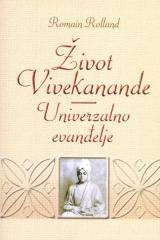
Život Vivekanande / Univerzalno evanđelje
A book about Swami Vivekananda (1863-1902), one of the most influential Hindus of modern times, in which Romain Rolland documents his life and teachings.