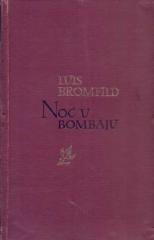
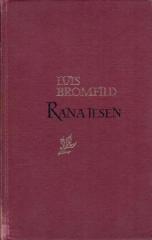
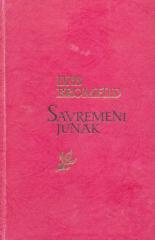
Louis Bromfield
Louis Bromfield (December 27, 1896, Mansfield, Ohio – March 18, 1956, Columbus, Ohio) was an American novelist, essayist, screenwriter, and pioneer of organic farming.
Born into a farming family, he studied agriculture at Cornell and then journalism at Columbia University. In 1917, he joined the U.S. Army Medical Corps in France, where he served until the end of World War I, receiving a medal for bravery. After the war, he worked as a journalist and music critic in New York. In 1923, he married Mary Appleton Wood, with whom he had three daughters. In 1925, he moved with his family to France, where he lived among American expatriates in Paris and became friends with Gertrude Stein, Edith Wharton, and other writers.
In France, he wrote his most successful works: The Green Bay Tree (1924), Possession (1925) and Early Autumn (1926), for which he received the Pulitzer Prize for the novel in 1927. The novels are thematically linked – they explore the individual's conflict with family traditions, Puritan heritage and American high society. His best-known novel is The Rains Came (1937), an epic story about catastrophic floods in India, which was a big film success.
After the outbreak of World War II, he returned to the USA. He bought the neglected Malabar Farm near his native Mansfield, Ohio, which he turned into an experimental agricultural estate. He became one of the earliest and most influential advocates of sustainable agriculture, soil conservation, contouring and organic farming. He wrote about it in the books Pleasant Valley (1945), Malabar Farm (1948) and From My Experience (1955).
In total, he published about 33 books (novels, essays and non-fiction), many of which were bestsellers and screened. Among the more famous are A Good Woman (1927), Mrs. Parkington (1943) and Bitter Lotus, 1936.
Bromfield embodied two seemingly opposite lives: a glittering career as an interwar bestselling author in Paris and a radical return to his roots and a pioneering ecological vision on the American farm. Today, he is remembered more as a visionary of sustainable agriculture than as a novelist, although his novels from the 1920s were among the most widely read of their era.
Titles in our offer
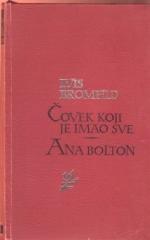

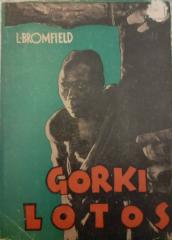
Gorki lotos
Gorki lotos (1936.) Louisa Bromfielda, dobitnika Pulitzerove nagrade predstavlja svojevrsni „nastavak sudbina“ nekih likova iz Bromfieldova poznatog romana Kiše dolaze, ali smješten u potpuno novu, samostalnu priču.
Gorki lotos
„Der bittere Lotus“ ist ein Roman von Louis Bromfield, in dem der wohlhabende Amerikaner Tom Dantry auf einer tropischen Insel die Liebe seines Lebens, die verheiratete Alix, kennenlernt. Aus der leidenschaftlichen Beziehung entwickelt sich ein bitterer K
Gorki lotos
Gorki lotos roman je Louisa Bromfielda u kojem bogati Amerikanac Tom Dantry na tropskom otoku ponovno susreće veliku ljubav svog života, udanu Aliks. Strastvena veza pretvara se u gorak sukob ljubavi, krivnje i nemogućnosti bijega od prošlosti.
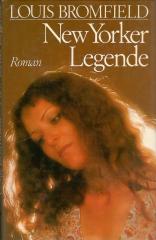
New Yorker Legende
Eine Sammlung von Erzählungen von Louis Bromfield über das Leben, den Ehrgeiz und exzentrische Charaktere im New York der 1920er Jahre. Witzige, nostalgische und satirische Darstellungen der amerikanischen Metropole.