Alberto Moravia
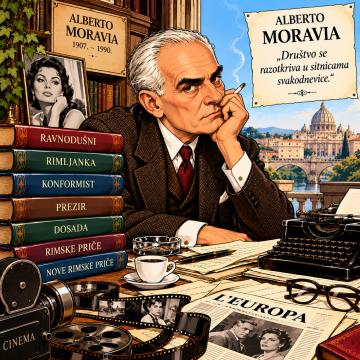
Alberto Moravia (1907–1990)—born Alberto Pincherle—was an Italian writer, novelist, short story writer, essayist, and journalist. He was born on November 28, 1907, in Rome, where he also died on September 26, 1990. He is considered one of the most significant Italian writers of the 20th century, renowned for his psychological analysis of characters, social criticism, and exploration of the alienation of modern man.
His childhood was marked by bone tuberculosis, which required him to spend years in sanatoriums. During his recovery, he read European classics extensively and developed his literary voice. He gained renown with his very first novel, The Time of Indifference (Gli indifferenti, 1929). In it, he portrays the moral emptiness, hypocrisy, and emotional alienation of bourgeois society.
During the Fascist regime, he faced censorship and political pressure. In 1941, he married the writer Elsa Morante, and during World War II, the couple spent some time in hiding to escape persecution.
After the war, he published the novel The Woman of Rome (La romana, 1947), a story about a young woman facing poverty and social constraints. Next came Disobedience (1948), The Conformist (Il conformista, 1951), and Contempt (Il disprezzo, 1954), in which he explores the relationship between the individual and society, sexuality, political opportunism, and the breakdown of interpersonal relationships.
The novel Boredom (La noia, 1960) is one of his most famous works, dedicated to existential emptiness, the impossibility of genuine communication, and alienation. The collections Roman Tales (1954) and More Roman Tales (1959) also hold a significant place, offering vivid portrayals of everyday life in Italian society.
Moravia also wrote travelogues, essays, and film criticism. His works were frequently adapted for the screen, notably The Conformist, directed by Bernardo Bertolucci, and Contempt, directed by Jean-Luc Godard.
His literary style is characterized by clarity of expression, psychological precision, irony, and a critique of bourgeois morality. Moravia left a profound mark on European literature, and his novels remain important testaments to loneliness, social contradictions, and the complexity of human relationships.
Titles in our offer
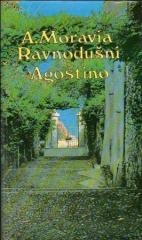
Ravnodušni / Agostino
Ravnodušni (1929.), Moravijin prvi i najslavniji roman, remek-djelo talijanskog modernizma, roman koji mu je donio ugled i proslavio ga. Agostino (1944.) jedna je od najliriskijih Moravijinih proza, kratak, ali snažan roman o sazrijevanju.
Ravnodušni ljudi
Roman prati propadajuću rimsku građansku obitelj Ardengo kroz nekoliko dana: udovica Mariagrazia, ljubavnik Leo, sin Michele i kći Carla – svi zarobljeni u apatiji, lažima, seksualnoj manipulaciji i moralnoj ravnodušnosti.
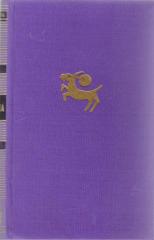
Rimljanka
Adriana, a beautiful Roman girl from a poor background, wants a normal life, but her mother pushes her into posing for painters and prostitution. Her love affairs lead her through betrayal, violence and corruption to her final resignation.
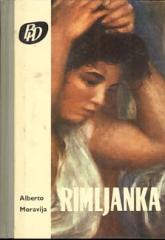
Rimljanka
Adriana, a beautiful Roman girl from a poor background, wants a normal life, but her mother pushes her into posing for painters and prostitution. Her love affairs lead her through betrayal, violence and corruption to her final resignation.
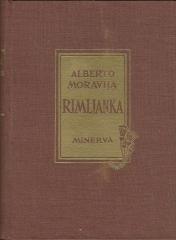
Rimljanka
Adriana, lijepa rimska djevojka iz siromašnog sloja, želi normalan život, ali je majka gura u poziranje slikarima i prostituciju. Ljubavne veze je vode kroz izdaju, nasilje i korupciju do konačne rezignacije.
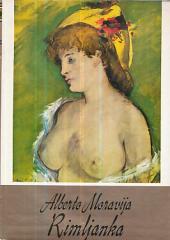
Rimljanka
Adriana, lijepa rimska djevojka iz siromašnog sloja, želi normalan život, ali je majka gura u poziranje slikarima i prostituciju. Ljubavne veze je vode kroz izdaju, nasilje i korupciju do konačne rezignacije.
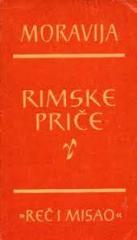
Rimske priče: izbor
Sammlungen von Kurzgeschichten aus dem römischen Leben der Nachkriegszeit: Einfache Leute aus dem Volk und dem Kleinbürgertum – die Armen, Arbeiter, Kleinhandwerker – sehen sich im Alltag mit Elend, Überlebenskampf, Eifersucht, kleinlichen Betrügereien un
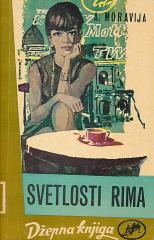
Svetlosti Rima
In diesen Geschichten untersucht Moravia Themen wie soziale Ungleichheit, den Kampf ums Überleben und menschliche Schwächen und porträtiert sie mit einer Mischung aus Humor, Ironie und realistischer Beobachtung.