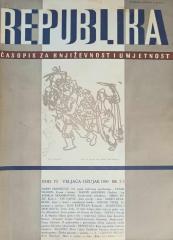
Tin Ujević
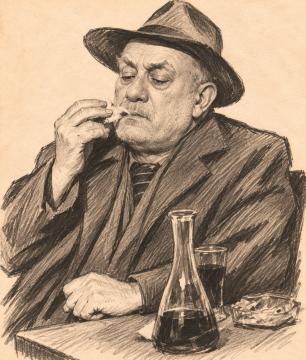
Tin Ujević (Augustin Ujević, Vrgorac, 5 July 1891 – Zagreb, 12 November 1955) was a Croatian poet, essayist, literary critic and translator. He studied Croatian language and literature, classical philology and philosophy in Zagreb. He began publishing poems and reviews in the circle of Antun Gustav Matoš, with whom he broke in 1911. From 1913 to 1919 he lived in Paris, where he wrote much of his early poetry. Ten of his poems appeared in the anthology Hrvatska mlada lirika (1914). After Paris he lived in Belgrade, Sarajevo and Split, then settled in Zagreb in 1940 and remained there until his death.
Ujević published his first two collections, Lelek sebra (1920) and Kolajna (1926), in Belgrade. Conceived as a single work, both bear the imprint of French Symbolism. The first centres on the solitary poet and his spiritual questioning, while the second takes the form of a sequence of love poems. In Auto na korzu (1932) and Ojađeno zvono (1933), regular stanzas and rhyme coexist with free verse and avant-garde techniques. In Pobratimstvo lica u svemiru, he links personal experience to the idea of human solidarity. In Notturno, rhythm and repetition evoke the solitude of the night.
Ujević also wrote poetic prose, essays and criticism. Ljudi za vratima gostionice and Skalpel kaosa (both 1938) show the range of his interests, from literature to social questions. In the cycle Crteži s kavanskog mramora, everyday scenes give way to autobiographical sketches and lyrical reflections. After a postwar ban on public activity that lasted until 1950, he published a selection of poems, Rukovet (1950). Žedan kamen na studencu (1954), prepared as early as 1944, was his final and most extensive original poetry collection. The posthumous Sabrana djela (1963–1967) brought together many poems that had been unpublished or scattered across periodicals.
Titles in our offer
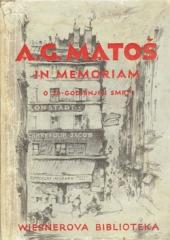
A. G. Matoš: In memoriam o 20-godišnjici pjesnikove smrti
A memorial collection published in 1934 by Ljubo Wiesner (Wiesner's Library, vol. 1). The editorial and authorial lead was Antun Barac, with contributions from Milan Ogrizović, Tin Ujević, Ljubo Weisner and other Croatian writers and critics.
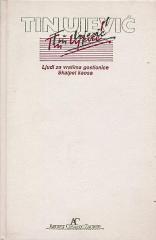
Ljudi za vratima gostionice, Skalpel kaosa
A collection of philosophical and bohemian essays in which Ujević vivisects society, literature, transience, and human nature, blending observations from Zagreb’s cafés with the imaginative "scalpel" of intellectual chaos.
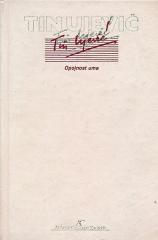
Opojnost uma : Misli i pogledi
A rich selection of Ujević’s essays and reflections on art, philosophy, poetry, and the human condition. The book reveals his erudition, aesthetic breadth, and passionate fascination with intellectual insights.
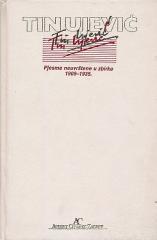
Pjesme neuvrštene u zbirke 1936-1955.
This collection, the fourth volume of "Selected Works", contains around 200 poems that were not included in Tino's main collections of that period. Nedjeljko Mihanović compiled the collection based on manuscripts, journals and archives.