Knut Hamsun

Knut Hamsun (Lom, 1859 – Nørholm, 1952) was a Norwegian writer and one of the most influential European prose writers at the turn of the 20th century. Born Knud Pedersen into a poor family, he spent his youth in northern Norway working various jobs and also lived in the United States on two occasions. Experiences of poverty, wandering, solitude, and life in direct contact with nature powerfully shaped his literary world.
He gained international acclaim with the novel Hunger (Sult, 1890), a radically modern work focused on the inner states of an impoverished young writer. Through fragmentary narration, psychological introspection, and the depiction of irrational impulses, Hamsun broke with the conventions of the realist novel and exerted a strong influence on the development of modernist prose.
His most important works include the novels Mysteries (1892), Pan (1894), Victoria (1898), Under the Autumn Star (1906), Growth of the Soil (Markens Grøde, 1917), Women at the Pump (1920), and The Last Chapter (1923), as well as the August trilogy: Wanderers (1927), August (1930), and The Road Leads On (1933). He also wrote novellas, plays, essays, travelogues, and poetry. He was awarded the Nobel Prize in Literature in 1920 for the novel Growth of the Soil.
Hamsun's literary legacy remained overshadowed by his political views. During World War II, he openly supported Germany, the Nazi regime, and the occupation authorities in Norway. After the war, he underwent a psychiatric evaluation and legal proceedings, and was fined for his association with the collaborationist movement.
His final major work, On Overgrown Paths (1949), is an autobiographical account written after the war. Despite the deep controversies surrounding his political involvement, Hamsun's innovative prose, psychological insight, and style exerted a powerful influence on 20th-century world literature.
Titles in our offer

Misterije
Johan Nilsen Nagel arrives in a small Norwegian town and disrupts its quiet atmosphere with his eccentric behavior. Love, loneliness, and inner conflicts gradually lead the enigmatic protagonist toward tragedy.
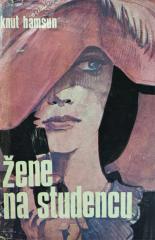
Žene na studencu
Žene na studenac, another great novel by Hamsun, more voluminous than the previous ones, was published three years after Fruits of the Earth.