Henry Miller

Henry Miller (New York, December 26, 1891 – Pacific Palisades, California, June 7, 1980) was an American writer, essayist, and painter known for his highly autobiographical prose, which pushed the boundaries of the literary depiction of sexuality, personal freedom, and bohemian life. He grew up in Brooklyn in a family of German descent and held various jobs before dedicating himself fully to literature.
A pivotal period of his life began in 1930 with his move to Paris, where he lived in poverty, associated with artists and writers, and developed his distinctive literary style. There, he met the writer Anaïs Nin, who became a close friend and a key figure in his literary circle.
He gained international attention with the novel Tropic of Cancer (1934), a radical blend of autobiography, fiction, essays, and erotic prose. This was followed by Black Spring (1936) and Tropic of Capricorn (1939). Due to their explicit sexual content, his works were banned or restricted for decades in the United States and Great Britain. American court cases involving Tropic of Cancer during the 1960s played a significant role in expanding the boundaries of freedom of literary expression.
After returning to the United States, Miller settled in California. He translated his travel experiences in Greece into Colossus of Maroussi, while he described life in California in the book Big Sur and the Oranges of Hieronymus Bosch. An important place is also occupied by the autobiographical trilogy Pink Crucifixion, which consists of the novels Sexus, Plexus and Nexus.
Miller's prose combines eroticism, humor, philosophical reflection, social criticism and confessional autobiography. He wrote against conformism, materialism and bourgeois social norms, advocating individual freedom and a creative life. He also dabbled in watercolor and considered fine art an important part of his own creativity.
His unconventional style strongly influenced the Beat generation and the American counterculture, and Henry Miller remained one of the most provocative and recognizable literary figures of the 20th century.
Titles in our offer
Rakova obratnica
This is an accusation, a slander, a personal insult. This is not a book, in the ordinary sense of the word. No, this is a continuous insult, a spit in the face of Art, a foot in the tur against God, Man, Fate, Time, Love, Beauty...whatever you want.

Rakova obratnica
This is an accusation, a slander, a personal insult. This is not a book, in the ordinary sense of the word. No, this is a continuous insult, a spit in the face of Art, a foot in the tur against God, Man, Fate, Time, Love, Beauty...whatever you want.
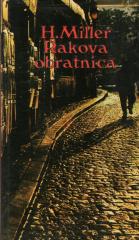
Rakova obratnica
This is an accusation, a slander, a personal insult. This is not a book, in the ordinary sense of the word. No, this is a continuous insult, a spit in the face of Art, a foot in the tur against God, Man, Fate, Time, Love, Beauty...whatever you want.

Rakova obratnica
This is an accusation, a slander, a personal insult. This is not a book, in the ordinary sense of the word. No, this is a continuous insult, a spit in the face of Art, a kick in the ass to God, Man, Fate, Time, Love, Beauty...whatever you want.

Ružičasto raspeće III: Nexus
Nexus, (1960), the final installment of the Pink Crucifixion trilogy, continues the autobiographical narrative from Sexus and Plexus. The novel follows Miller's alter ego in 1920s New York, focusing on his inner development, relationships, and artistic qu

Ružičasto raspeće II: Plexus
Plexus (1953), the second part of the trilogy, continues the autobiographical story begun in Sexus. The novel focuses on Miller's life in New York in the 1920s, exploring his artistic pursuits, relationships, and struggle for freedom from social conventio