Erich Kästner
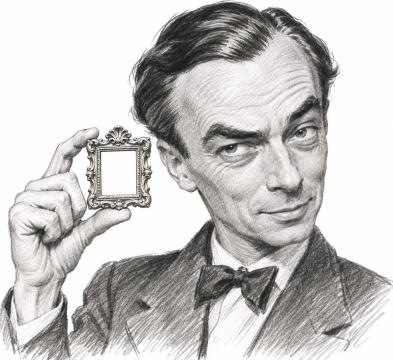
Erich Kästner holds up a frame to show us his miniature. The frame is there, the picture is gone. For a writer who turned the disappearance of one picture into an entire novel, that’s a perfectly respectable beginning.
Kästner (Dresden, 1899 – Munich, 1974) was a German writer and journalist. He trained as a teacher and went on to study in Leipzig, Rostock and Berlin after the First World War. From 1927 he lived in Berlin as a freelance writer. In his poems, newspaper pieces and novels, he had an ear for people who sound most serious when they are at their funniest.
In Emil i detektivi (Emil und die Detektive, 1929), a boy has his money stolen on the way to Berlin. The children he meets there organise a search, divide up the work and show how well they know a city that adults merely hurry through. In Leteći razred (Das fliegende Klassenzimmer, 1933), a school play brings together boys whose friendship is tested offstage too. In Blizanke (Das doppelte Lottchen, 1949), two girls discover they are sisters and swap places to get to know the parent they did not grow up with.
In Fabijan (Fabian, 1931), Kästner follows a young man in Berlin towards the end of the Weimar Republic, in a city whose humour barely conceals its economic and social insecurity. The Nazis burned Kästner’s books in 1933. He remained in Germany, while some of his work appeared abroad during those years.
Among those works was Iščezla minijatura ili Dogodovštine tankoćutnog mesara (Die verschwundene Miniatur, 1935). A Berlin butcher named Külz gets caught up in a case involving a valuable painting while travelling. Where an experienced detective would suspect a trick, Külz still believes he is doing someone a favour. That gap gives Kästner both his comedy and his plot. In 1960 he received the Hans Christian Andersen Award for his contribution to children’s literature.
Titles in our offer
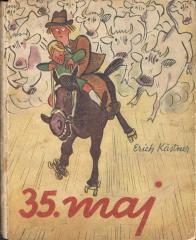
35. maj
Konrad, his uncle and an extraordinary horse embark on a marvellous journey to the South Seas. Fantastic adventures, historical figures and upside-down worlds distinguish this classic by Erich Kästner.
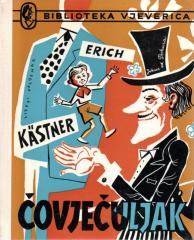
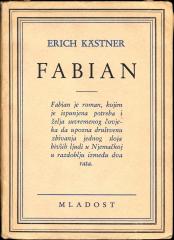
Fabian: Pripovijest o moralistu
Jakob Fabian, an unemployed Germanist and moralist, wanders through Berlin in the 1930s, observing the moral, political and social decay and the rise of Nazism. He falls in love with Cornelia, but tragedies and nonsense lead him to a tragic end. Criticism

Iščezla minijatura
Berlin butcher Oskar Külz becomes entangled in an adventure involving a valuable miniature painting while holidaying in Copenhagen. Theft, mistaken identities and unexpected twists follow in this witty mystery.
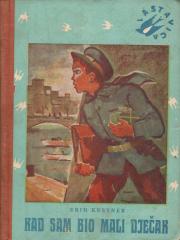
Kad sam bio mali dječak
When I Was a Little Boy by Erich Kästner is an autobiographical prose about childhood in Dresden - a warm, humorous and moving book about family, growing up, school and a disappearing world.
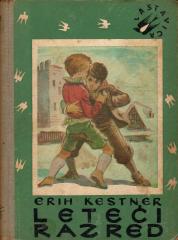
Leteći razred
Many people throw away their childhood like old hat. They forget it like a phone number that no longer works. First such people were children, then they became adults, but what are they really? Only those who grow up and remain human!