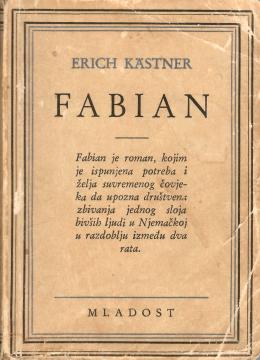
Fabian: Pripovijest o moralistu
Jakob Fabian, an unemployed Germanist and moralist, wanders through Berlin in the 1930s, observing the moral, political and social decay and the rise of Nazism. He falls in love with Cornelia, but tragedies and nonsense lead him to a tragic end. Criticism
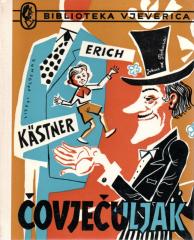
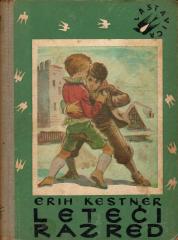
The novel by Erich Kästner (1899–1974), author of children's classics such as Emil and the Detective and The Flying Class, Fabian is his most serious, darkest and most political work for adults. Published in 1931 in Stuttgart, the novel was immediately banned and burned by the Nazis in 1933 (Kästner was present at the burning of his own books). The first edition was censored (explicit erotic parts were removed); the full, uncensored version (Der Gang vor die Hunde) was only published posthumously in 2013, and earlier in some editions.
The protagonist Jakob Fabian (32 years old, doctor of German) works in an advertising agency, but loses his job in the midst of the economic crisis. A passive observer ("just watching"), he drifts through Berlin's nightlife: cabarets, brothels, alcohol, superficial relationships, political extremes (communists vs. Nazis). Fabian is an intellectual-moralist who believes in reason, decency and humanism, but he sees society falling apart - people are sold, values disappear, politics becomes a circus. He falls in love with Cornelia Battenberg, an ambitious actress and intellectual, who gives him hope, but the relationship falls apart under the pressure of time. The key tragic event: the suicide of a friend of Labude (due to a false accusation of plagiarism), which Fabian perceives as a personal defeat. In the end, in a drunken state, Fabian drowns in the river – a senseless, helpless ending that symbolizes the fate of the liberal intelligentsia in the face of totalitarianism.
The novel is a mixture of satire, melancholy and sharp social criticism: it makes fun of the Berlin decadence of the "golden twenties" that turns into a nightmare, pornography as a metaphor for society, media manipulation, mass unemployment. Kästner uses short, crisp sentences, a documentary style, newspaper quotes and poems.
No copies available
The last copy was sold recently.