Karl Marx
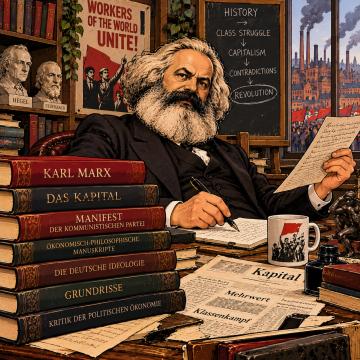
Karl Marx (Trier, May 5, 1818 – London, March 14, 1883) was a German philosopher, economist, sociologist, political theorist, and writer, and one of the most influential thinkers of the 19th century. He studied law and philosophy in Bonn and Berlin, where he became acquainted with the philosophy of Georg Wilhelm Friedrich Hegel. He received his doctorate in 1841; however, due to political circumstances, he did not pursue an academic career, dedicating himself instead to journalism, philosophy, and political activism.
A pivotal moment in his life was his meeting with Friedrich Engels, who became his longtime friend, collaborator, and financial supporter. Together, they developed a theory of history based on material living conditions and social relations. In works such as The Holy Family and The German Ideology, they critiqued contemporary German philosophy and laid the foundations of historical materialism.
In 1848, Marx and Engels published The Communist Manifesto, one of the most influential political texts of the modern era. Following revolutionary upheavals, Marx moved to London in 1849, where he spent the rest of his life. There, he engaged in the intensive study of political economy and was active in the international workers' movement.
His most important work is Capital, a comprehensive analysis of the capitalist mode of production. The first volume was published in 1867, while the second and third volumes were prepared by Engels after Marx's death. Marx analyzes commodity, value, capital, wage labor, surplus value, accumulation and class relations, trying to explain the internal dynamics of the capitalist economy.
Among the important works are Economic and Philosophical Manuscripts from 1844, Misery of Philosophy, Eighteenth Brumaire of Louis Bonaparte, Grundrisse, Contribution to the Critique of Political Economy and Critique of the Gothic Program.
Marx's thought strongly influenced philosophy, economics, sociology, historiography and political movements of the 19th and 20th centuries. Different schools of Marxism developed from his work, often very different from each other. Regardless of political interpretations, his analysis of the relationship between labor, capital, class and social power remains an important part of modern social and economic theory.
Titles in our offer

Das Kapital. Buch II: Der Cirkulationsprocess des Kapitals. Dritte Auflage
Capital. Critique of political economy. Volume Two [Third Edition], with a preface by Friedrich Engels.
![Das Kapital. Buch III: Der Gesammtprozess der kapitalistischen Produktion. Dritter Band, erster [und] zweiter Theil. Erste Auflage](https://arka-knjiga.hr/static/images/books/b14921-1717497118559240.jpg)
Das Kapital. Buch III: Der Gesammtprozess der kapitalistischen Produktion. Dritter Band, erster [und] zweiter Theil. Erste Auflage
Capital: A Critique of Political Economy. Third volume, first and second parts [First edition]. A rare first edition of one of the most influential books ever published.
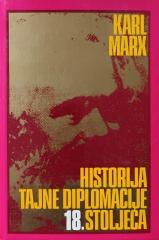
Historija tajne diplomacije 18. stoljeća
Marx's "History of the Secret Diplomacy of the 18th Century" exposes the hidden political mechanisms of the European powers, analyzing class interests and backroom deals. A rare text not included in standard editions of Marx's works.


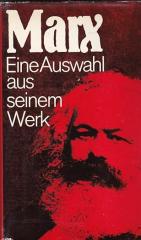
Karl Marx Eine Auswahl aus seinem Werk - Der Mann der dem Sozialismus eine wissenschaftliche Grudlage gegeben hat
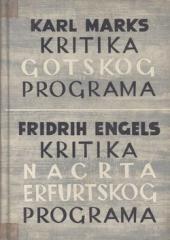
Kritika gotskog programa / Kritika nacrta erfurskog programa
With letters from Marx and Engels with texts by Lenin on Marx's and Engels' criticism
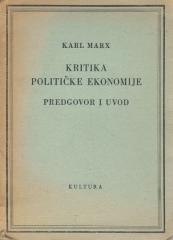
Kritika političke ekonomije: Predgovor i Uvod
Preface and Introduction Marx's Critique of Political Economy summarizes historical materialism: society develops through production relations, and the economic base determines the political and cultural superstructure.