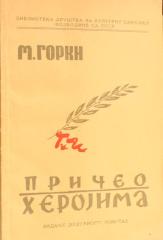
Maksim Gorki
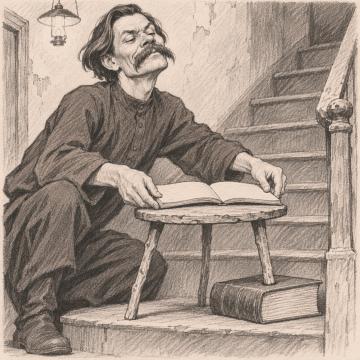
Maxim Gorky (1868–1936) knew what a thick book was worth when the table wobbled. It could prop up the shortest leg. Open it and you might find that it’s about the very people who spend their lives keeping things from falling apart. In The Lower Depths (На дне, 1902), people like that share a lodging house and argue about the truth. There’s little room to spare, but everyone finds room for an opinion.
Born Alexei Maximovich Peshkov in Nizhny Novgorod, Gorky grew up in poverty, worked as an apprentice, porter, clerk and bakery hand, and largely educated himself. He published his first story, Makar Chudra (Макар Чудра, 1892), under the name Maxim Gorky. Sketches and Stories (Очерки и рассказы, 1898) brought him a wider readership. His fiction makes room for wanderers, day labourers and people another writer might have left standing at the door. Gorky gives them time to tell their side, and they often turn out to have heard and seen more than the people with better lodgings.
In Mother (Мать, 1906–1907), Pelageya Nilovna learns about the revolutionary movement through her son, a factory worker, and gradually finds a role of her own. The novel later became a model for socialist realism. Gorky gives a different account of poverty and growing up in his autobiographical trilogy, Childhood (Детство), In the World (В людях) and My Universities (Мои университеты). That last title is a little ironic. Young Peshkov goes to Kazan hoping to study and ends up getting his education from work, books and the people he meets.
Gorky spent years in Italy, on Capri and later in Sorrento. He criticised the Bolshevik authorities after the October Revolution and, after returning to the Soviet Union, became a central figure in its literary life. His later works include The Artamonov Business (Дело Артамоновых, 1925) and the unfinished Life of Klim Samgin (Жизнь Клима Самгина). A single act of The Lower Depths is enough for a first encounter. Once the lodgers start arguing about whether the truth can help them, you soon forget the table is still wobbling.
Naslovi u ponudi
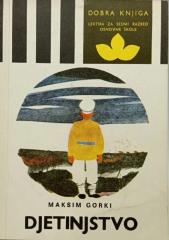
Djetinjstvo
The first part of Maxim Gorky’s autobiographical trilogy is a poignant and honest account of the upbringing of a boy named Alyosha in the harsh, impoverished, and violent environment of Tsarist Russia in the late 19th century.
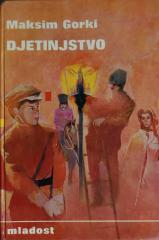
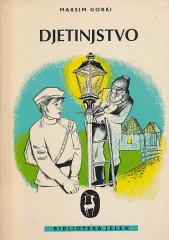
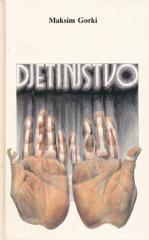
Djetinjstvo
"Childhood" tells about the cruelty of growing up, the meager and difficult life of a Russian province.
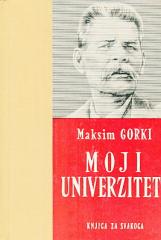
Moji univerziteti
Autobiografska trilogija - Detinjstvo, U svetu, Moji univerziteti. Sudeći po nekim njegovim pismima i delima, Gorki je ovu trilogiju zamislio još 1893. godine i pisao ju je od 1913. do 1923. godine.
O literaturi
Prva trećina knjige daje preglede ruske književnosti (Čehov, Ljeskov, Puškin...). Drugo poglavlje se bavi svetskom književnošću (Balzak, Stendal, Rolan...), a treće poglavlje sadrži opšte članke.