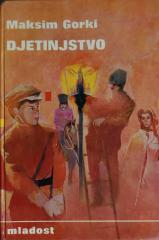
Djetinjstvo
The first part of Maxim Gorky’s autobiographical trilogy is a poignant and honest account of the upbringing of a boy named Alyosha in the harsh, impoverished, and violent environment of Tsarist Russia in the late 19th century.
The novel "Childhood" (1813–1814) is the first and most well-known work in an autobiographical trilogy by the great Russian and Soviet writer Maxim Gorky (along with its sequels, "In the World" and "My Universities"). Through the character of the boy Alyosha Peshkov (the author’s real name), Gorky presents an unvarnished, poignant, and exceptionally realistic portrait of his own early childhood following his father’s death—a time when he and his mother went to live in the home of his maternal grandfather in Nizhny Novgorod. In that household, Alyosha confronts a dark world of poverty, family feuds, greed, and daily physical and psychological violence. However, the grim atmosphere of this domestic environment is tempered by the presence of his grandmother, Akulina—a warm, wise, and deeply religious woman who offers the boy unconditional love, comfort, and a belief in goodness. His grandmother and a few dear friends become his spiritual shield and a source of inner strength. With great mastery and psychological depth, Gorky depicts the complexities of human nature, social injustice, and the misery of Tsarist Russia during that era. "Childhood" is not merely a moving story about growing up and preserving one’s humanity under the most difficult circumstances; it also stands as one of the most significant achievements in both Russian and world autobiographical literature.
Multiple copies are available
Copy number 1
- Library stamp
Copy number 4
- Traces of patina