Ivo Andrić
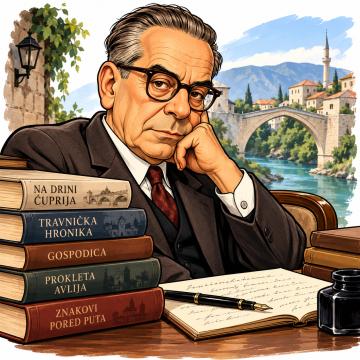
Ivo Andrić (October 9, 1892 – March 13, 1975) was a Croatian-Bosnian-Serbian writer and the only winner of the Nobel Prize in Literature from the former Yugoslavia (1961). He was born in Travnik and educated in Sarajevo, Zagreb, Vienna and Kraków. During World War I he was a political prisoner for sympathizing with Yugoslav unity. After the war he began a diplomatic career, working in various European capitals.
Andrić is best known for his novels and short stories that deal with the history and destiny of Bosnia and its people, often set in the Ottoman and Austro-Hungarian context. His most famous works are "Na Drini ćuprija", "Travnička hronika" and "Gospođica", which together form a kind of trilogy about Bosnian history and mentality. "Na Drini ćuprija", an epic novel about the centuries-old history of the city of Višegrad and its bridge, won him the Nobel Prize.
His style is calmly reflective, historically informed, and deeply humanistic, and his themes are often marked by reflections on evil, fate, suffering, and historical cycles.
Andrić left behind a rich body of essays, short stories, and novels, and his work continues to occupy an important place in the literature of Southeast Europe.
Titles in our offer
Prokleta avlija
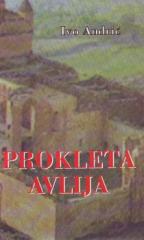
This work is considered to be Andrić's best composed work, precisely because of the narrative process in which he presented the story in a ring structure, i.e. in the work, the stories are told one inside the other. The characters are complex and layered,
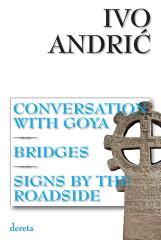
Razgovor s Gojom / Mostovi / Znakovi pored puta: izbor - Conversation with Goya / Bridges / Signs by the Roadside: selection
The bilingual edition of Dereta brings selected prose and essay works by Ivo Andrić – Conversation with Goja, Bridges and Signs by the Road – in a parallel Serbian-English presentation.
Sabrana djela IX: Deca - pripovetke
This collection includes a series of stories that focus on the world of children, their innocence, curiosity, suffering and dealing with the cruelties of the adult world.
Sabrana djela IX: Znakovi - pripovetke
Ova zbirka objedinjuje niz kraćih Andrićevih dela koja se bave ljudskim sudbinama, istorijskim i društvenim prilikama i univerzalnim pitanjima ljudske prirode.
Sabrana djela XI: Kuća na osami i druge pripovetke
Izbor kratkih priča u ovoj knjizi sastoji se iz dva dela. Jednu čini samostalna zbirka pripovedaka „Kuća na osami“, koju je Andrić radio pred kraj svog života, a drugi deo je zbirka pripovedaka pisanih u različitim periodima.
Sabrana djela X: Staze, lica, predeli
"Staze, lica, predeli" zbirka je eseja i zapisa Ive Andrića, prvi put objavljena 1963. godine. Ovo djelo razlikuje se od Andrićeve beletristike jer se bavi filozofskim, introspektivnim i autobiografskim razmatranjima.
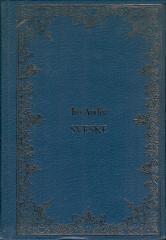
Sabrana djela XVII: Sveske
„Sveske” su posthumno objavljene beležnice Ive Andrića sačinjene od dvanaest originalnih svezaka i odvojenih listova. Donose njegove misli o književnosti, istoriji, umetnosti, čoveku i procesu stvaranja.
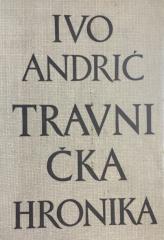
Travnička hronika: Konsulska vremena
"Travnička hronika" (1945.) povijesna je priča smještena u Travniku od 1807. do 1814., tijekom Napoleonovih ratova i osmanske vladavine Bosnom. Pisan za vrijeme Drugog svjetskog rata po modelu evropskog realističkog romana.
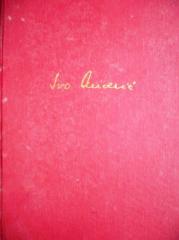
Travnička hronika : konzulska vremena
Travnička hronika (1945) je povijesni roman napisan za vrijeme Drugog svjetskog rata, ostvaren po modelu europskog realističkog romana.