Ivo Andrić
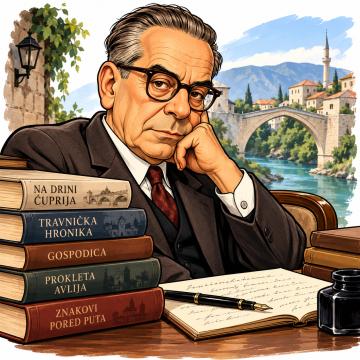
Ivo Andrić (9. listopada 1892. – 13. ožujka 1975.) bio je hrvatsko-bosansko-srpski književnik i jedini dobitnik Nobelove nagrade za književnost s prostora bivše Jugoslavije (1961). Rođen je u Travniku, a školovao se u Sarajevu, Zagrebu, Beču i Krakovu. Tijekom Prvog svjetskog rata bio je politički zatvorenik zbog simpatiziranja jugoslavenskog jedinstva. Nakon rata započinje diplomatsku karijeru, radeći u raznim europskim prijestolnicama.
Andrić je najpoznatiji po svojim romanima i pripovijetkama koje tematiziraju povijest i sudbinu Bosne i njezinih ljudi, često smještenih u osmanski i austrougarski kontekst. Njegova najpoznatija djela su "Na Drini ćuprija", "Travnička hronika" i "Gospođica", koja zajedno čine svojevrsnu trilogiju o bosanskoj povijesti i mentalitetu. "Na Drini ćuprija", epski roman o viševjekovnoj povijesti grada Višegrada i njegovog mosta, donio mu je Nobelovu nagradu.
Stil mu je mirno-refleksivan, povijesno-informiran i duboko humanistički, a teme su često obilježene promišljanjem zla, sudbine, trpljenja i povijesnih ciklusa.
Andrić je ostavio bogat opus eseja, pripovijedaka i romana, a njegovo djelo i dalje zauzima važno mjesto u književnosti jugoistočne Europe.
Naslovi u ponudi
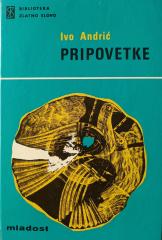
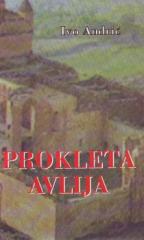
Prokleta avlija
Ovo djelo smatra se Andrićevim najbolje komponiranim djelom, upravo zbog narativnog postupka u kojem je priču iznio u prstenastoj strukturi, tj. u djelu su priče ispričane jedna unutar druge. Likovi su kompleksni i slojeviti, s jedinstvenim karakterima.
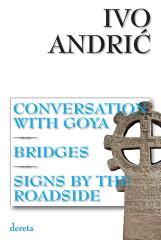
Razgovor s Gojom / Mostovi / Znakovi pored puta: izbor - Conversation with Goya / Bridges / Signs by the Roadside: selection
Dvojezično izdanje Derete donosi odabrane prozne i esejističke radove Ive Andrića – Razgovor s Gojom, Mostove i Znakove pored puta – u paralelnom srpsko-engleskom prikazu.
Sabrana djela IX: Deca - pripovetke
Ova zbirka obuhvaća niz pripovijedaka koje se fokusiraju na svijet djece, njihovu nevinost, radoznalost, patnju i suočavanje s okrutnostima svijeta odraslih.
Sabrana djela IX: Znakovi - pripovetke
Ova zbirka okuplja niz Andrićevih kraćih djela koja se bave ljudskim sudbinama, povijesnim i društvenim okolnostima te univerzalnim pitanjima ljudske prirode.
Sabrana djela XI: Kuća na osami i druge pripovetke
Izbor novela u ovoj knjizi sastoji se od dvaju dijelova. Jedan čini samostalna novelistička zbirka "Kuća na osami" na kojoj je Andrić radio pred sam kraj života, a u drugom dijelu skupljene su novele nastale u različitim razdobljima.
Sabrana djela X: Staze, lica, predeli
"Staze, lica, predeli" zbirka je eseja i zapisa Ive Andrića, prvi put objavljena 1963. godine. Ovo djelo razlikuje se od Andrićeve beletristike jer se bavi filozofskim, introspektivnim i autobiografskim razmatranjima.
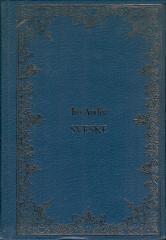
Sabrana djela XVII: Sveske
„Sveske” su posthumno objavljene beležnice Ive Andrića sačinjene od dvanaest originalnih svezaka i odvojenih listova. Donose njegove misli o književnosti, istoriji, umetnosti, čoveku i procesu stvaranja.
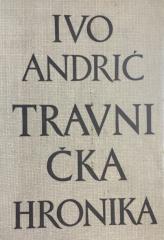
Travnička hronika: Konsulska vremena
"Travnička hronika" (1945.) povijesna je priča smještena u Travniku od 1807. do 1814., tijekom Napoleonovih ratova i osmanske vladavine Bosnom. Pisan za vrijeme Drugog svjetskog rata po modelu evropskog realističkog romana.
Travnička hronika : konzulska vremena
Travnička hronika (1945) je povijesni roman napisan za vrijeme Drugog svjetskog rata, ostvaren po modelu europskog realističkog romana.