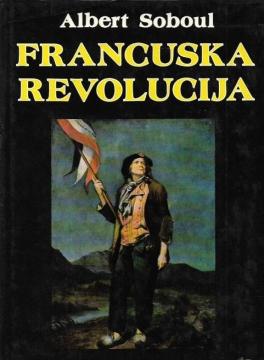
Francuska revolucija: Historijski pregled

Albert Soboul traces the French Revolution from the crisis of the Old Regime to Napoleon’s coup in 1799, connecting political events with social conflict, economic change and popular mobilisation.
Albert Soboul’s La Révolution française surveys the upheaval that transformed France between 1789 and 1799 and reshaped European history. Beginning with the crisis of monarchy and the society of orders, it examines how financial pressures, social inequality and political demands developed into revolution.
The narrative follows the dismantling of the Old Regime, constitutional monarchy, the establishment of the republic, Jacobin government and the Terror. It then considers the Thermidorian reaction and the Directory, concluding with Napoleon’s coup of 18 Brumaire in 1799.
Soboul gives particular attention to peasants, urban workers, artisans and the sans-culottes, exploring their demands and their relationships with revolutionary governments. Political developments are connected to property, food supplies, prices and warfare, revealing competing interests within the revolutionary movement.
The book belongs to the Marxist tradition that interprets the Revolution as a bourgeois transformation shaped by popular intervention. Combining chronological narrative with social analysis, it offers a clearly defined historical perspective on the causes, conflicts and consequences of a decisive turning point in the emergence of the modern world.
One copy is available