Mit o nebeskoj Srbiji

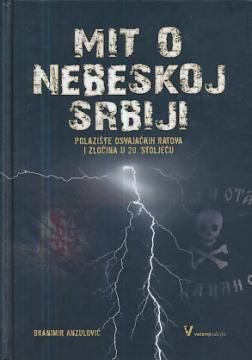
Mit o nebeskoj Srbiji

Branimir Anzulović

The starting point of wars of conquest and crimes in the 20th century

This book was written for people around the world who for almost the entire 20th century were exposed to the myth of the Serbs as a noble people and guardians of Yugoslavia, and from the middle of the century to the additional myth of the Croats as pro-fascist destroyers of that country. The international acceptance of such myths favored the strengthening of Serbian megalomania and territorial appetites and made various world statesmen incapable of a correct and timely response to Serbian attempts to turn the former Yugoslavia into Greater Serbia. This was fatal not only for the Croats, Bosniaks, Albanians and all others who found themselves under attack from the Great Serbian strategy, but also for the Serbs themselves. Many people around the world still believe in the truth of the myths that contributed to the brutal breakup of the former Yugoslavia. If their falsity is not exposed, they can lead to new failures.

Editor
Zvonimir Despot
Graphics design
RedPoint
Dimensions
22 x 15 cm
Pages
247
Publisher
Večernji posebni proizvodi d.o.o, Zagreb, 2011.
 
Latin alphabet. Hardcover.
Language: Croatian.
ISBN
978-9-53731-374-6

No copies available

The last copy was sold recently.

 

Are you interested in another book? You can search the offer using our search engine or browse books by category.

You may also be interested in these titles

Aktualni aspekti nacionalnog pitanja u Jugoslaviji

Aktualni aspekti nacionalnog pitanja u Jugoslaviji

Dušan Dragosavac

The author investigates the political, economic and social aspects that shaped national relations within Yugoslavia, with an emphasis on the issue of national minorities and their rights.

Globus, 1984.
Croatian. Latin alphabet. Hardcover with dust jacket.
7.22
Gotovina: stvarnost i mit

Gotovina: stvarnost i mit

Ivica Đikić, Davor Krile, Boris Pavelić

Hero or criminal? War genius or military dilettante? Liberator or persecutor of Serbian civilians? The three journalists do not offer cheap and unequivocal answers to these questions.

Novi Liber, 2010.
Croatian. Latin alphabet. Paperback.
11.26
Dobri ljudi u vremenu zla

Dobri ljudi u vremenu zla

Svetlana Broz

The book Good people in the time of evil (1999) by Svetlana Broz is a collection of true stories from the war in Bosnia and Herzegovina (1992-1995), which bear witness to the humanity, solidarity and moral courage of individuals in the midst of conflict.

Media centar "Prelom", 2001.
Croatian. Latin alphabet. Paperback.
12.36
Političke zajednice

Političke zajednice

Rene Coste

It is not my intention to write a work from political science (political science), law or sociology, and especially not from the field of political morality, based only on rational criteria - which could be accepted by any person of good will.

Kršćanska sadašnjost, 1995.
Croatian. Latin alphabet. Paperback.
6.22
Radovan Karadžić: Uzroci, postanak i uspon genocida u Bosni i Hercegovini

Radovan Karadžić: Uzroci, postanak i uspon genocida u Bosni i Hercegovini

Robert J. Donia

Robert J. Donia's book provides an analytical look at Karadzic's life and the political, ideological, and social processes that led to war crimes and genocide in the 1990s.

University press, 2016.
Croatian. Latin alphabet. Paperback.
32.56
Hrvatski duh Alke: simbolika i filozofija hrvatske povijesti

Hrvatski duh Alke: simbolika i filozofija hrvatske povijesti

Petar Vučić

Through Sinj's Alka, the entirety of the Croatian ethnic and ethical being is encompassed.

Consilium, 1998.
Croatian. Latin alphabet. Paperback.
5.623.93