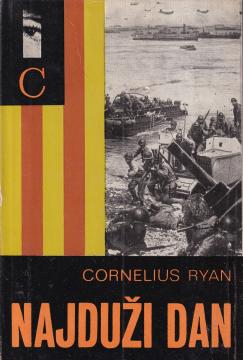
Najduži dan

Najduži dan

Cornelius Ryan

The book is about D-Day, the first day of the invasion of Normandy in World War II. It describes in detail the main operation of the sailing force, which captured the Caen Canal and the bridges on the River Orne before the main attack on the Normandy coas

An unrivaled historical classic that re-creates the battle that changed World War II - the Allied invasion of Normandy. The Longest Day is Cornelius Ryan's unsurpassed account of D-Day, a book that remains a masterpiece of military history. In this compelling story of courage and heroism, glory and tragedy, Ryan painstakingly reconstructs the fateful hours leading up to and following the massive invasion of Normandy to tell the story of the epic battle that would turn the tide against world fascism and free Europe from the grip of Nazi Germany. This book, first published in 1959, is a must for anyone who loves history, as well as anyone who wants to better understand how free nations prevailed during a time when darkness enveloped the Earth.

Original title
The Longest Day
Translation
Renata Mikša
Editor
Frane Barbieri
Graphics design
Marija Jevšovar
Dimensions
20.5 x 13.5 cm
Pages
310
Publisher
Epoha, Zagreb, 1965.
 
Latin alphabet. Hardcover with dust jacket.
Language: Croatian.

No copies available

The last copy was sold recently.
 

Are you interested in another book? You can search the offer using our search engine or browse books by category.

You may also be interested in these titles

Ljubljana u borbi 1941–1945: Zbornik sećanja

Ljubljana u borbi 1941–1945: Zbornik sećanja

The collection brings together the memories of participants in the national liberation struggle in Ljubljana during World War II. The collection contains personal testimonies, which provide insight into the everyday life, struggle and sacrifices of the in

Vojnoizdavački zavod, 1978.
Serbian. Latin alphabet. Hardcover with dust jacket.
9.76
U zlopolju

U zlopolju

Dragutin Grgurević

"In Zlopolje" by Dragutin Grgurević tells the story of the operations of the Third Dalmatian National Liberation Strike Brigade during the NOB. The book is small in format, but of great importance for understanding the local aspects of the NOB.

Narodna armija, 1971.
Croatian. Latin alphabet. Hardcover.
6.36
"Enigma" do pobjede

"Enigma" do pobjede

Ilija Marinković

The story of three Polish mathematicians who cracked the German Enigma cipher machine in the 1930s. Their secret work allowed the Allies to read Nazi messages during the war, shortening it by years and saving millions of lives.

NIŠRO "Vjesnik", 1977.
Croatian. Latin alphabet. Hardcover.
6.32
Partizanska i komunistička represija i zločini u Hrvatskoj 1944.-1946.: dokumenti. Knjiga 2: Slavonija, Srijem i Baranja

Partizanska i komunistička represija i zločini u Hrvatskoj 1944.-1946.: dokumenti. Knjiga 2: Slavonija, Srijem i Baranja

Vladimir Geiger

The first critical edition of original documents (187 of them) of units and institutions of the NOV and PO of Yugoslavia and Croatia on the actions taken against defeated military and political opponents in the area of ​​Slavonia, Srijem and Baranja befor

Hrvatski institut za povijest, 2006.
Croatian. Latin alphabet. Hardcover.
15.42
Hrvatska u arhivima izbjegličke vlade 1941-1943.: Izvještaji informatora o prilikama u Hrvatskoj

Hrvatska u arhivima izbjegličke vlade 1941-1943.: Izvještaji informatora o prilikama u Hrvatskoj

Ljubo Boban

Academician Ljubo Boban, in his work Croatia in the Archives of the Government in Exile 1941–1943, brings together a collection of diplomatic reports from various European and international representative offices of the Yugoslav government in exile during

Globus, 1985.
Croatian. Latin alphabet. Hardcover with dust jacket.
9.52
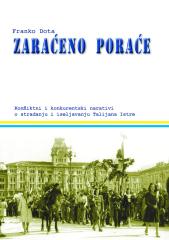
Zaraćeno poraće: Konfliktni i konkurentski narativi o stradanju i iseljavanju Talijana Istre

Zaraćeno poraće: Konfliktni i konkurentski narativi o stradanju i iseljavanju Talijana Istre

Franko Dota

The book analyzes how conflicting historical narratives about the suffering and mass emigration of Italians from Istria and Rijeka developed in Croatia and Italy after World War II (1943–1956), debunking myths and encouraging an empathetic approach to the

Srednja Europa, 2010.
Croatian. Latin alphabet. Paperback.
11.32