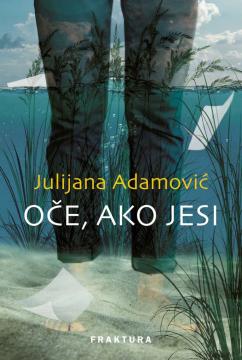
Oče, ako jesi
Father If You Are by Julijana Adamović is a powerful family saga about the search for a father, identity, and truth, written through the destinies of women and men in the whirlwind of history, in the heart of Pannonia, where the earth gives birth and buri
When in 1965, while rescuing people from a flooded village, young reservist Damjan Knežević comes across a valuable World War II wristwatch and a stack of documents, he believes he has found a trace of his father. Following the clues in diaries and papers for more than twenty years, he will search for his father, and in fact piece together the story of Pal Nađ. A story that could also be the fate of his father, unknown to him. The Vojvodina Hungarian Nađ had three sons with three different women – a Swabian, a Hungarian and a Herzegovinian, all three of them in one way or another bore the name Tomo, and he dreamed big dreams for himself, which he never realized. The fate of Pal Nađ, his wives, mother and children is the fate of those who are toyed with by the whirlwind of history, those who believe in a better future that will last until the next war, the next revolution. Julijana Adamović wrote a magnificent novel about Pannonia – the black land that gives birth and buries. Father, If You Are is an atypical family saga, a great novel about women and men, about political officials, about ordinary people, but above all about sons who are left without fathers and spend their entire lives searching for them instead of going their own, different, path.
"It wasn't even eight full years before the careless mowing, before the father's betrayal because, Pal thought, what else can you call that cowardice and selfish flight - the wickedness with which your father, even dead, tries to tame you, to tie you to the desolate rows of corn with a hoe - not only the horse left, but also those who persistently pin him to the stubble and plowed fields by their own absence: Miško and Jani. Just like that: they fell and ducked. But, he will escape from them. This was also the case in April 1941, when the war found him near the end of his term in the old army, and he was wounded in the hand and face by the Swabians. "Don't speak to me in Serbian," he said to his two colleagues, and he was the best: he apprenticed them with Klug Ott, the Swabian language and the reference to Klug. saved the camp. The others ended up there. Them on camera. He spent the rest of the war under the protection of boss Otto, far from bullets and trenches, counting on how it would last until the end."
One copy is available