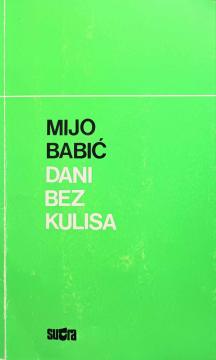
Dani bez kulisa

Dani bez kulisa

Mijo Babić

Mijo Babić was a complex personality who left his mark on the history of Croatia. His story and actions are still the subject of research and debate.

Editor
Miljenko Mandžo
Illustrations
Žejko Maričić
Graphics design
Branko Stojaković
Dimensions
24 x 14.5 cm
Pages
59
Publisher
Nakladni centar DLS, Zadar, 1977.
 
Latin alphabet. Paperback.
Language: Croatian.

One copy is available

Condition:Used, excellent condition
 

Are you interested in another book? You can search the offer using our search engine or browse books by category.

You may also be interested in these titles

Perje svitanja

Perje svitanja

Stevo Leskarac

In Leskarc's poems, we will quickly find themes about art and creativity, the Croatian language and folk customs, and national heritage.

Naklada Bošković, 2020.
Croatian. Latin alphabet. Hardcover.
11.96
Luda priča i ostale pjesme za djecu

Luda priča i ostale pjesme za djecu

Pero Budak

Short, rhythmic, playful and humorous poems portray the world from a child's perspective, simultaneously entertaining and gently teaching.

Intergraf, 1975.
Croatian. Latin alphabet. Paperback.
3.26
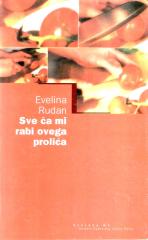
Sve ča mi rabi ovega prolića

Sve ča mi rabi ovega prolića

Evelin Rudan

Everything I Need This Spring is the first solo poetry collection by Evelina Rudan, a poet and scholar from Pula and Zagreb (born 1971). The book represents a significant contribution to contemporary Istrian Chakavian lyric poetry.

Naklada MD, 2000.
Croatian. Latin alphabet. Paperback.
5.32
Uglavnom pridjevi

Uglavnom pridjevi

Hrvoje Jurić

The collection "Uglavnom adjevjevi" by Hrvoje Jurić brings together ten cycles of poetic sketches and poems.

Algoritam, 2014.
Croatian. Latin alphabet. Paperback.
8.147.33
U meni lutanja

U meni lutanja

Jovanka Ivanka Komlen

This is a collection of poetry that explores the inner world of a woman, her feelings, identity, search for meaning, and place in the world.

Vlastita naklada, 2010.
Croatian. Latin alphabet. Paperback.
5.98
88

88

Nadija Rebronja

A piano usually has 88 keys, 52 white and 36 black, from which 88 tones emerge. A pianist usually reads 88 notes. These 88 micro-proses simultaneously constitute one piano and one piano concerto.

Buybook, 2022.
Croatian. Latin alphabet. Paperback.
5.94