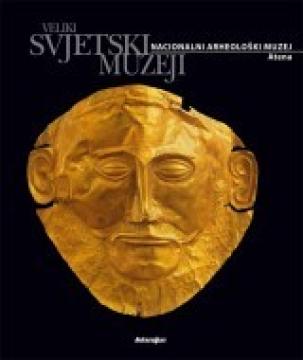
Veliki svjetski muzeji: Nacionalni arheološki muzej, Atena

Veliki svjetski muzeji: Nacionalni arheološki muzej, Atena

Cecilia de Meo

Various collections unfold from hall to hall of the Archaeological Museum, creating a fresco of Greek civilization whose various artistic expressions merge into an inextricable bond.

The Neolithic collection, with objects found at the Thessalian sites, and especially in Seskl and Dimini, along with painted ceramics, offers the observer the first examples of plastic expression in small statues that were created according to the motif of the Mother Goddess. The Cycladic collection is an expression of the culture that developed in antiquity on the islands of that archipelago and consists of marble statuettes with depictions of idols in rigid and abstract forms. The beautiful wall paintings from the village of Akrotiri on Thira, today's Santorini, are an excellent example of a refined civilization that developed the techniques and motifs of great Cretan painting. The royal tombs in Mycenae stand out for their incredible wealth as part of the Mycenaean collection, the first of its kind in the world, which is still being enriched with new objects. The museum also preserves a sculpture collection that contains the greatest masterpieces of antiquity and uniquely encompasses the development of Greek art from the first monumental sculptures to Hellenistic and Roman era sculptures. We thus see the development of their relationship to the human figure in space, the gradual adoption of anatomy, all the way to the formulation of the canon of proportions.

There is also a collection of ceramic objects through which it is possible to follow the development of Greek ceramic art and the progressive development of the techniques that accompany it. Collections of bronzes, jewelry and numismatics complete the rich content of this museum.

Entering the halls of the Athens Archaeological Museum means embarking on an incredible journey to discover our identity through the poetics that marked the Mediterranean and European identity and laid the foundation for the entire European art.

Translation
Srećko Jurišić
Editor
Gordan Zečić
Dimensions
23 x 19.5 cm
Pages
142
Publisher
EPH media d. o. o., Zagreb, 2012.
 
Latin alphabet. Paperback.
Language: Croatian.
ISBN
978-9-53338-028-5

One copy is available

Condition:Used, excellent condition
 

Are you interested in another book? You can search the offer using our search engine or browse books by category.

You may also be interested in these titles

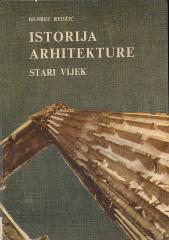
Istorija arhitekture stari vijek

Istorija arhitekture stari vijek

Husref Redžić

The author presents the main architectural styles, construction techniques, and cultural influences that have shaped architecture throughout history.

Zavod za izdavanje udžbenika, 1969.
Croatian. Latin alphabet. Hardcover with dust jacket.
12.0010.80
Rad panike

Rad panike

Goran Ferčec, Siniša Ilić

The work of panic by Goran Ferčec and Siniša Ilić is the first volume of the third round of the Friends library, a joint edition of MaMe and Books. Goran's text and Siniša's drawings were created as part of the production of the same name by the BADco gro

Multimedijalni institut, 2020.
Croatian. Latin alphabet. Paperback.
8.42 - 9.56
Umetnost na tlu Jugoslavije : Islamska minijatura

Umetnost na tlu Jugoslavije : Islamska minijatura

Zagorka Janc

Through these "miniatures", the author brings the reader closer to the world of different traditions, emphasizing the beauty, mysticism, and complexity of Islamic culture, but also universal themes such as transience, identity, and the meaning of life.

Jugoslavija, 1985.
Serbian. Latin alphabet. Hardcover.
9.007.20
Bestijarij: Od predaje do umjetnosti i natrag

Bestijarij: Od predaje do umjetnosti i natrag

Jadranka Damjanov

A collection of essays by a distinguished Croatian art historian, exploring the symbolism of animals in art, folklore, and mythology, connecting ancient traditions with their reflection in fine art and culture.

Sipar, 2008.
Croatian. Latin alphabet. Paperback.
12.56 - 12.58
Kodovi identiteta

Kodovi identiteta

Leonida Kovač's discourse is explicit and direct, almost bodily. It fills and disrupts space. Her theory mimics the work of the performative, it is active. It takes place in one moment and one place of utterance/pronunciation.

Meandar, 2001.
Croatian. Latin alphabet. Paperback.
7.74
Pazolini po Pazoliniju: razgovor Đuzepea Kardila i Pjer Paola Pazolinija u Njujorku

Pazolini po Pazoliniju: razgovor Đuzepea Kardila i Pjer Paola Pazolinija u Njujorku

Pier Paolo Pasolini, Giuseppe Cardillo

In one of the last interviews, from 1969, Giuseppe Cardillo talks to Pier Paolo Pasolini, director of cult films such as Salo or 120 days of Sodom and Decameron, writer, poet and one of the most important intellectuals of Italy in the 20th century

Multimedijalni institut, 2023.
Serbian. Latin alphabet. Paperback.
7.54