Bhagavad Gita
Rare book

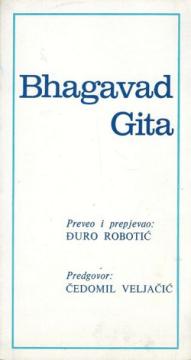
Bhagavad Gita

Translated from the book by Annie Besant and Bhagavan Das: Bhagavad Gita. With a Foreword by Čedomil Veljačić "The Message of the Bhagavad-Gita through the Centuries".

The Bhagavad Gita is a poetic work composed of 18 cantos and 700 stanzas. The author of Bhagavd Gita is Dvaipayana Vyasa (Veda Vyas). The poem describes a conversation between the Supreme Lord Krishna and the warrior Arjuna on the battlefield. The work was placed at the beginning of the sixth book (Bhishmaparavan) as one of the episodes of the great Indian epic Mahabharata. Orthodox Hindus consider the contents of the Bhagavad Gita to be a faithful representation of the teachings of Sri Krishna, who is said to have died around 3102 BCE. Therefore, the teachings contained in the Bhagavad Gita would have originated from that ancient time. However, cultural-historical, linguistic and stylistic reasons, along with signs that the book changed its form over time, indicate that the work in its current form and size was created around 300 BC. The Bhagavad Gita was written in Sanskrit and has been translated into almost all languages ​​of the world. Making a great contribution to Croatian translated literature, the Bhagavad Gita was sung into Croatian with great artistic effort by Đuro Robotić. One of the most significant translations of the Bhagavad Gita in the Croatian language is that by Ankica Franjić under the title Bhagavd Gita as it is, based on the model of the English edition of the Bhaktivedanta book trust with translations and comments by Bhaktivedanta Swami Prabhupada, who is described by the Britannica encyclopedia as one of the most significant representatives of Indian spiritual thought .

Translation
Đuro Robotić
Dimensions
24 x 13 cm
Pages
209
Publisher
Vlastita naklada, Zagreb, 1972.
 
Latin alphabet. Paperback.
Language: Croatian.

No copies available

The last copy was sold recently.

 

Are you interested in another book? You can search the offer using our search engine or browse books by category.

You may also be interested in these titles

Žena koja je slikala kanom

Žena koja je slikala kanom

Alka Joshi

„Žena koja je slikala kanom“ je debitantski roman indijsko-američke autorice Alke Joshi, prvi dio trilogije Jaipur. Roman je hvaljen zbog autentičnog prikaza rajasthanske kulture i univerzalne teme ženske emancipacije.

Mozaik knjiga, 2021.
Croatian. Latin alphabet. Paperback.
13.22
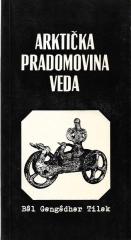
Arktička pradomovina Veda

Arktička pradomovina Veda

Bal Gandahar Tilak

Knjiga Arktička pradomovina Veda (1903.) indijskog učenjaka Tilaka iznosi hipotezu da su drevni Arijevci, autori Rigvede, potjecali iz arktičkog područja. Iako kontroverzna, knjiga ostaje važna u proučavanju vedskih tekstova i indijske povijesti.

NIRO Književne novine, 1987.
Serbian. Latin alphabet. Paperback.
17.56
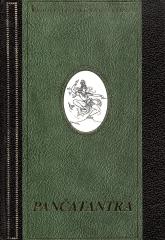
Pančatantra

Pančatantra

The Panchatantra was conceived as a kind of manual for rulers, in which popular wisdom is combined with philosophy, psychology and politics, and all of this is presented in a simple and elegant style of superior literature.

LOM, 2008.
Serbian. Cyrillic alphabet. Paperback.
9.76
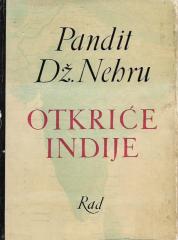
Otkriće Indije

Otkriće Indije

Jawaharlal Nehru

The Discovery of India, written in 1946 during Nehru's time in prison, is a monumental work that explores the history, culture, and spirit of India. Nehru, a key figure in the Indian independence movement, writes about the past and with a vision for the n

Rad, 1952.
Serbian. Latin alphabet. Hardcover with dust jacket.
9.46
Pančatantra: u najstarijoj sačuvanoj recenziji Tantrakhjajika

Pančatantra: u najstarijoj sačuvanoj recenziji Tantrakhjajika

The Panchatantra is a work of classical Sanskrit literature written between the 3rd and 5th centuries CE. According to preserved manuscripts and numerous adaptations, the work later took the form of a popular folk book.

Naprijed, 1999.
Croatian. Latin alphabet. Hardcover.
22.76