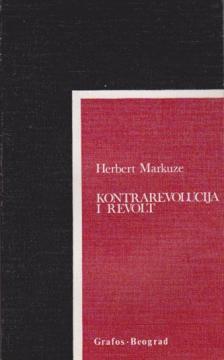
Kontrarevolucija i revolt

A critical analysis of the social conflicts after the uprisings of the 1960s, the rise of conservative forces and the possibility of radical change. Marcuse explores the relationship between revolt, repression, freedom and liberation.
Counter-Revolution and Revolt (1972) is one of the major works of Herbert Marcuse, a German-American philosopher and prominent figure of the Frankfurt School. Written in the wake of the massive student, anti-war, and social uprisings of the 1960s, the work explores the possibilities for revolutionary change in advanced industrial societies.
Marcuse analyzes how the existing political and economic order responds to demands for liberation. He views counter-revolution not merely as overt repression, but also as a process in which social resistance is neutralized through political pressure, economic power, manipulation, and the assimilation of radical ideas into the existing system.
He pays particular attention to student movements, the New Left, the struggle against racism and imperialism, and the relationship between social change and everyday life. He examines the potential for linking various emancipatory movements and the obstacles standing in the way of their collective action.
Art, culture, and the aesthetic dimension of liberation occupy a significant place in the book. Marcuse highlights the capacity of art to challenge established forms of experience and open up space for imagining a different kind of society.
Counter-Revolution and Revolt represents a significant contribution to critical social theory and political philosophy, particularly for understanding the interplay between social resistance, institutional power, and the possibilities for emancipation.
One copy is available