Tišina u osinjaku

Tišina u osinjaku

Luka Ostojić

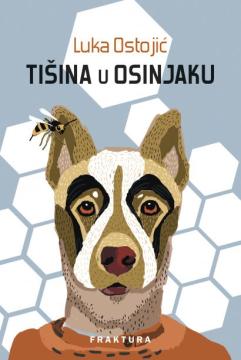
Just as its title suggests, Luka Ostojić's Silence in the Wasp is a book that leads to dangerous, uncertain places.

Welcome, then, to complicated love relationships, strange marriages and large families - places you know, but which by some miracle you have never seen before. Make yourself as comfortable as possible on the islands of loneliness, where Ostojić's heroes live at a turning point surrounded by swarms of bad (and sometimes happy) news. But be careful: that which breathes inside is hard, the hardest reality, only deftly poised on the egg of madness, which is about to be drunk! The newlyweds will run away to a mystical mountain in the middle of their wedding, the sexualized spirit of Goran Bogdan will move into the girls' apartment, housewives will search for an African prince on the Internet, and high school students will reconstruct the story of the tragically deceased Afghan girl Madina Hussiny, but in each of these great stories you will sooner or later catch up with Ostojić's red-hot buzz, the sting that the world wants to change for the better. Clever, moving, humorous and seductively drinkable, Luka Ostojić's Silence in the Wasp is one of the wittiest domestic books you will read, but the good fun in it will have to be paid for with reflection, and with a bit of chills. By reading and asking: is the wasp really quiet, or do we just need to wait a little longer?

Editor
Seid Serdarević
Graphics design
Ivana Jurić
Dimensions
21 x 14 cm
Pages
185
Publisher
Fraktura, Zaprešić, 2023.
 
Latin alphabet. Hardcover with dust jacket.
Language: Croatian.
ISBN
978-9-53358-633-5

Two copies are available

Copy number 1

Condition:Unused

Copy number 2

Condition:Unused
 

Are you interested in another book? You can search the offer using our search engine or browse books by category.

You may also be interested in these titles

Rot und Schwarz: Chronik aus dem Jahr 1830

Rot und Schwarz: Chronik aus dem Jahr 1830

Marie-Henry Beyle Stendhal

Historical and psychological novel by Stendhal, published in 1830. The full title of the novel is "Red and Black, Chronicle of the 19th Century". The protagonist is Julien Sorel. The work is a bildungsroman that follows his upbringing and life path.

Deutscher Bücherbund, 1976.
German. Latin alphabet. Hardcover with dust jacket.
6.64
Agent in eigener Sache

Agent in eigener Sache

John Le Carre

Magnus Pym, a successful British intelligence officer and double agent, disappears after his father's funeral. In hiding, he writes a memoir about a life shaped by a deceitful father, lies, and betrayal. Le Carré's most autobiographical novel.

Hoffmann und Campe Verlag, 1980.
German. Latin alphabet. Hardcover with dust jacket.
11.44
Agostino

Agostino

Alberto Moravia

Thirteen-year-old Agostino spends the summer at the seaside with his beautiful widowed mother. When she becomes close to her lover, the boy feels rejected and joins the company of rough local boys to get revenge and grow up.

Zora, 1957.
Croatian. Latin alphabet. Paperback with dust jacket.
9.46
Sons and Lovers

Sons and Lovers

David H. Lawrence

Sons and Lovers (1913) is a semi-autobiographical novel by D. H. Lawrence about Paul Morel, a young man trapped between the possessive love of his mother and two mistresses, in search of identity and sexual freedom.

Penguin Books Ltd, 1979.
English. Latin alphabet. Paperback.
4.32
Čiča Goriot / Eugenie Grandet

Čiča Goriot / Eugenie Grandet

Honore de Balzac

Together, Uncle Goriot and Eugenie Grandet deliver Balzac's powerful portrayal of the power of money, family relationships, and social ambitions, revealing how greed, love, and sacrifice shape human destinies.

Naprijed, 1967.
Croatian. Latin alphabet. Hardcover with dust jacket.
9.64
Finis Terrae: Ostavština

Finis Terrae: Ostavština

Raoul Schrott

Schrott's Finis Terrae: Legacy novel is constructed as a found legacy: a blend of notes, travel, history, and fiction in search of the edges of the world, identity, and memory.

Meandar, 2003.
Croatian. Latin alphabet. Paperback.
3.26