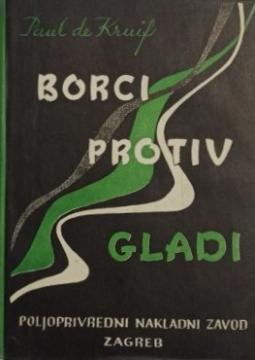
Borci protiv gladi
The book Hunger Fighters profiles the scientists who defeated hunger: Carleton and other wheat breeders, livestock disease fighters, corn hybridizers, and researchers of hidden famines. The famous sequel to Microbe Hunters.
Fighters Against Hunger (1928) by Paul de Kruif is a thrilling collection of stories about the unsung heroes of science who provided food for humanity in the first half of the 20th century. The book consists of eleven essays divided into the following themes: wheat, meat, corn, and the “hidden hunger.”
The author celebrates people like Mark Carleton, who brought resistant wheat varieties from Russia, scientists who suppressed livestock epidemics (Dorset, Mohler, Francis), breeders of hybrid corn (Shull), and pioneers of nutrition—Babcock, Steenbock, and Joseph Goldberger, whose research on pellagra saved thousands of lives. De Kruif writes in a dynamic, almost romantic style, transforming laboratory experiments and fieldwork into epic battles against hunger, disease, and adversity.
The book shows how plant breeding, the control of animal diseases, and the discovery of vitamins enabled a great increase in food production and a decrease in nutritional diseases. The style is similar to Microbe Hunters – enthusiastic, inspiring, sometimes overly dramatic, but extremely readable. In the interwar period, the work spread faith in science as a savior from hunger. The Croatian edition from 1955 (translated by Gaži and Kišpatić) made this classic available in our country. An ideal read for lovers of the history of science, agriculture and public health.
Two copies are available
Copy number 1
- Slight damage to the dust jacket
Copy number 2
- Library stamp
- Traces of patina
- The cover is missing