Istorija Pariske komune 1871.

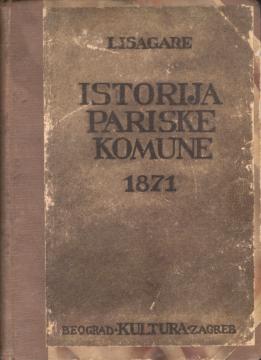
Istorija Pariske komune 1871.

Prosper-Olivier Lissagaray

Prosper-Olivier Lissagaray, a French journalist, politician, and participant in the Paris Commune, wrote History of the Paris Commune in 1871 as a detailed account of the events that marked the first workers' government in history.

The work, published in 1876 and translated into Serbian in 1946, is based on the author's personal experiences and testimonies of other participants, providing an authentic insight into the events of that period.

The book chronologically follows the events from the Franco-Prussian War and the fall of the Second Empire, through the establishment of the Third Republic, to the outbreak and suppression of the Paris Commune. Lissagaray analyzes the political and social circumstances that led to the revolution, the internal conflicts within the Commune, and the brutal repression that the government carried out against the Communards.

Special emphasis is placed on the role of the working class, attempts at social reform, and the struggle for social justice. The author does not hide the weaknesses and mistakes of the Commune, but emphasizes its historical importance as the first attempt to establish working-class power.

This book remains an important source for the study of the Paris Commune, providing not only historical facts but also a passionate defense of the ideals for which the Communards fought.

Dimensions
20 x 14 cm
Pages
488
Publisher
Mladost, Beograd, 1946.
 
Latin alphabet. Hardcover.
Language: Serbian.

One copy is available

Condition:Used, very good condition
Damages or inconvenience notice:
  • Traces of patina
 

Are you interested in another book? You can search the offer using our search engine or browse books by category.

You may also be interested in these titles

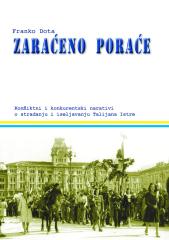
Zaraćeno poraće: Konfliktni i konkurentski narativi o stradanju i iseljavanju Talijana Istre

Zaraćeno poraće: Konfliktni i konkurentski narativi o stradanju i iseljavanju Talijana Istre

Franko Dota

The book analyzes how conflicting historical narratives about the suffering and mass emigration of Italians from Istria and Rijeka developed in Croatia and Italy after World War II (1943–1956), debunking myths and encouraging an empathetic approach to the

Srednja Europa, 2010.
Croatian. Latin alphabet. Paperback.
11.32
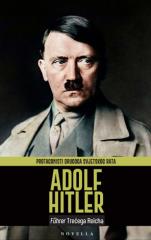
Protagonisti Drugog svjetskog rata: Adolf Hitler - Führer Trećega Reicha

Protagonisti Drugog svjetskog rata: Adolf Hitler - Führer Trećega Reicha

Joan Solé

In the book, Joan Solé shows the life, ideology and rise of Adolf Hitler. The book explores how a charismatic but fanatical leader shaped a totalitarian regime and plunged the world into one of the most tragic wars in history.

Twins Company d.o.o., 2025.
Croatian. Latin alphabet. Paperback.
8.56
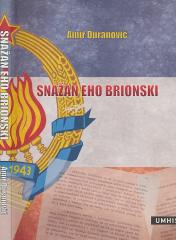
Snažan eho brionski: Odjeci Brionskog plenuma u Bosni i Hercegovini 1966. godine

Snažan eho brionski: Odjeci Brionskog plenuma u Bosni i Hercegovini 1966. godine

Amir Duranović

Amir Duranović's book reconstructs in detail the dramatic year 1966 and the Fourth (Brion) Session of the Central Committee of the Communist Party of Yugoslavia (July 1–2, 1966), at which Aleksandar Ranković, the long-time head of the UDB and vice preside

Udruženje za modernu historiju (UMHIS), 2017.
Croatian. Latin alphabet. Paperback.
9.54
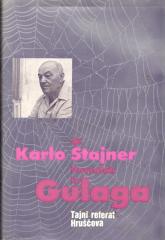
Povratak iz Gulaga: Tajni referat Hruščova

Povratak iz Gulaga: Tajni referat Hruščova

Karlo Štajner

A sequel to his memoir 7000 Days in Siberia, in which he describes his twenty-year imprisonment in Soviet gulags. The book delves into his experiences in the camps, providing additional insights into Steiner's life and reflections on communist ideals.

Globus, 1986.
Croatian. Latin alphabet. Hardcover with dust jacket.
10.768.43 - 11.2410.76
Lex Perković: Tajna udbaškog ubojstva

Lex Perković: Tajna udbaškog ubojstva

Večernjak's collection of political documentaries

Večernji list, 2013.
Croatian. Latin alphabet. Paperback.
1.98
Doživljaji i putovanja do slobode

Doživljaji i putovanja do slobode

Vladimir Novak

The autobiographical work of Croatian communist activist Vladimir Novak, a survivor of the Ustasha camps, follows his memories of resistance to fascism during World War II.

August Cesarec, 1979.
Croatian. Latin alphabet. Hardcover with dust jacket.
8.26