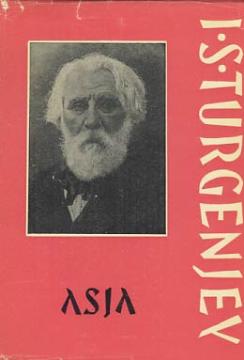
Asja

Asja

Ivan Sergejevič Turgenjev

The work is a typical example of Russian realism and deals with love, inner struggle, and missed opportunities.

The narrator, a young Russian from a noble family, spends the summer in Germany, where he meets an unusual girl, Asya, and her half-brother, Gagen. Asya is temperamental, witty, but also fickle and sensitive. Gradually, an emotional closeness develops between the narrator and Asya, but he is insecure, reserved, and unable to express his feelings.

Asya reveals to him that she is a bastard, a child out of wedlock, which has further shaped her character and sense of not belonging. She wants him to honestly admit what he feels – but he does not. Due to his indecision and fear, he misses the opportunity to express his love to her.

In the end, Asya leaves the place of residence with Gagen, and the narrator is left alone, with bitterness and regret for the missed opportunity. Later in life, remembering Asya, he realizes that she was the only true love in his life – but now it is too late.

Original title
Ася
Translation
Ivan Paprika, Ljubo Perković
Editor
Jakša Kušan
Graphics design
Valerija Pavić
Dimensions
20 x 14.5 cm
Pages
289
Publisher
Matica hrvatska, Zagreb, 1964.
 
Latin alphabet. Hardcover with dust jacket.
Language: Croatian.

One copy is available

Condition:Used, excellent condition
Damages or inconvenience notice:
  • Slight damage to the dust jacket
 

Are you interested in another book? You can search the offer using our search engine or browse books by category.

You may also be interested in these titles

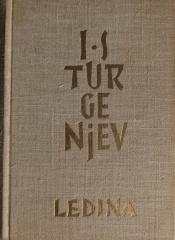
Ledina

Ledina

Ivan Sergejevič Turgenjev
Matica hrvatska, 1963.
Croatian. Latin alphabet. Hardcover.
4.98
Novi rod : (Nov)

Novi rod : (Nov)

Ivan Sergejevič Turgenjev
Matica hrvatska, 1908.
Croatian. Latin alphabet. Hardcover.
16.99
Prolećne vode

Prolećne vode

Ivan Sergejevič Turgenjev
Nolit, 1974.
Serbian. Latin alphabet. Hardcover.
3.26
Zagrepčanka

Zagrepčanka

Branislav Glumac

Branislav Glumac published a novel without periods or commas in 1974, as the relentless stream of thought of a young rebel. Published in socialist Yugoslavia, the work caused a scandal with its openness and became a classic about generational rebellion.

IROS, 1986.
Croatian. Latin alphabet. Hardcover.
8.24
Deobe

Deobe

Dobrica Ćosić

Deobe is a novel about the tragic division of Serbs into Chetniks and Partisans during World War II. Winner of the NIN Award, it is part of a wider epic trilogy, inspired by Ćosić's experiences and historical documents.

Prosveta, 1963.
Croatian. Latin alphabet. Hardcover with dust jacket.
13.74
Deobe 1-3

Deobe 1-3

Dobrica Ćosić

This work, awarded the NIN Prize for that year, is considered one of the most significant in Serbian literature after World War II.

Prosveta, 1961.
Serbian. Cyrillic alphabet. Hardcover with dust jacket.
The book consists of 3 volumes
11.42