Arktička pradomovina Veda
Rare book

Arktička pradomovina Veda

Bal Gandahar Tilak

The book The Arctic Homeland of the Vedas (1903) by the Indian scholar Tilak proposed the hypothesis that the ancient Aryans, the authors of the Rigveda, originated in the Arctic region. Although controversial, the book remains important in the study of V

Tilak bases his thesis on Vedic texts, astronomical references, and mythological descriptions to support the idea that the original homeland of the Aryans was in the far north, near the North Pole, before they migrated to the Indian subcontinent.

Tilak analyzes Vedic accounts of long polar days and nights, which point to a region where the sun does not set for six months, characteristic of the Arctic. He describes Vedic mythology, such as the stories of Indra and Vritra, as allegories of natural phenomena such as the polar dawn and darkness. He also uses astronomical data from the Rigveda, such as the positions of the stars, to date the texts and connect them to the period around 4500–2500 BC, placing them in the context of climate change after the Ice Age.

The book also examines linguistic and cultural links between Indo-European peoples, suggesting that the Aryans brought their traditions from the Arctic to India. Tilak's hypothesis has caused controversy, but is significant for its interdisciplinary analysis and contribution to debates about the origins of Indo-European peoples.

Original title
The Arctic Home in the Vedas
Translation
Milan Mladenović
Editor
Dragoš Kalajić
Dimensions
21 x 11.5 cm
Pages
403
Publisher
NIRO Književne novine, Beograd, 1987.
 
Latin alphabet. Paperback.
Language: Serbian.

One copy is available

Condition:Unused
 

Are you interested in another book? You can search the offer using our search engine or browse books by category.

You may also be interested in these titles

Poreklo Slovena: Osvrti na DNK-genealogiju

Poreklo Slovena: Osvrti na DNK-genealogiju

Anatolij A. Kljosov

Anatoly A. Klyosov's book The Origin of the Slavs - A Look at DNA Genealogy uses DNA genealogy methods to reconstruct the origins of the Slavs, Serbs, and Russians, challenging traditional theories of migration in the 6th century.

Miroslav, 2013.
Serbian. Cyrillic alphabet. Hardcover.
34.26
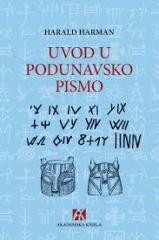
Uvod u podunavsko pismo

Uvod u podunavsko pismo

Harald Haarman

Introduction to the Danubian Script by Harald Haarmann (2010) is the first systematic introduction to the oldest writing system in Europe – the Old European or Danubian script (c. 5300–3200 BC), which emerged within the framework of the Danubian Civilizat

Akademska knjiga, 2022.
Serbian. Latin alphabet. Hardcover.
20.00
Sloveni u dalekoj prošlosti

Sloveni u dalekoj prošlosti

Valentin V. Sedov

A fundamental archaeological and historical work on the ethnogenesis of the Slavs from the 2nd millennium BC to the middle of the 1st millennium AD. The author reconstructs the origins, culture, and early migrations of the Slavs based on archaeological fi

Akademska knjiga, 2012.
Serbian. Latin alphabet. Hardcover with dust jacket.
32.00
Užasi povijesti: Strašni Egipćani

Užasi povijesti: Strašni Egipćani

Terry Deary, Peter Hepplewhite

The book depicts life in ancient Egypt in a humorous and entertaining way. Readers learn about the pharaohs, mummies, pyramids, gods, and the everyday life of Egyptians through interesting facts.

Egmont, 2002.
Croatian. Latin alphabet. Paperback.
8.32
Zagonetka podunavske civilizacije

Zagonetka podunavske civilizacije

Harald Haarman

Harald Haarmann's book presents the discovery of Europe's oldest highly developed culture (c. 5500–3500 BC), known as the Danube or Old European Civilization, with an emphasis on its writing, art and influence.

Akademska knjiga, 2019.
Croatian. Latin alphabet. Paperback.
27.00