Maus: Preživjeli priča
A groundbreaking graphic novel in two parts, winner of the Pulitzer Prize in 1992 – the first for a comic book. The story intertwines two times: the present (1978–1980s New York) and the past (Poland 1930s–1945).
Art Spiegelman, a comic book artist, interviews his father, Vladek, a Holocaust survivor, to record his story. Vladek is stingy, stubborn, obsessed with saving and health, and his relationship with Art is strained – full of guilt, misunderstandings and unresolved trauma. His mother, Anya, committed suicide when Art was 20; her diaries have been lost or destroyed.
Vladek recounts his life: meeting and marrying Anya in pre-war Poland, the birth of his son Richieu, the German occupation, life in the Sosnowiec ghetto, hiding, betrayal, hunger and fear. The rich become beggars, friends betray for salvation. Vladek uses resourcefulness, language skills, the black market and luck to survive. The family is separated; Richieu dies of poisoning to avoid ending up in a camp. Vladek and Anya end up in Auschwitz – he in a labor camp, she in the women’s section. They survive selections, hunger, forced labour, death marches. The feeling of "cats" (Nazis) haunts "mice" (Jews), Poles are "pigs", Americans are "dogs".
The novel ends with the liberation, the couple's reunion and return to Poland, and then emigration to America. However, Vladek dies in 1982, and Art is left with the burden of the story and the guilt of survivors.
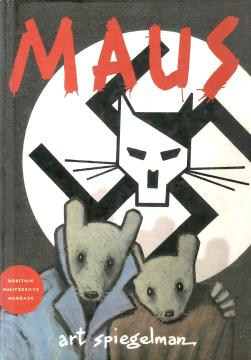
Spiegelman uses animals as a metaphor (Jews = mice, Nazis = cats) to depict racism and dehumanization, but also irony - masks fall, people remain people. The work is a powerful combination of biography, history and psychological drama about the legacy of trauma, memory and the impossibility of fully understanding the Holocaust.
One copy is available