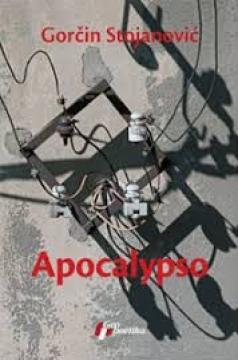
Apocalypso

Apocalypso

Gorčin Stojanović

Apocalypso is a collection of prose texts (short stories, essays, feuilletons, lyrical fragments) by the famous Serbian director, screenwriter and critic Gorčin Stojanović (b. 1966).

The texts were written between 1997 and the spring of 2000; the first was inspired by the second album of the band Haustor, and the last ends with the spirit of depleted Belgrade (a comparison with depleted uranium). The third part of the book has not been published before.

The title combines "apocalypse" and "calypso" - the end of the world with dance, ironic rhythm and nostalgic exile. Stojanović writes about transitional Serbia in the 90s: the shadows of war, cultural poverty, urban decay, media hysteria, artistic impotence and personal fractures. The language is precise, cynical, poetically charged - a mixture of black humor, irony and melancholy.

The collection is an intimate portrait of a generation that lived at the end of a world: Belgrade as a labyrinth of time, where the past and the present collide in chaos. The texts are connected by emotions - from music and film to everyday absurdity - and read like a lyrical diary of an intellectual in the war and the post-war period.

Regarded as one of the most authentic prose pieces about the 90s in Serbia – not pathetic, but lucid and bitter, with a touch of rock'n'roll energy and cinematic rhythm. The book is rare in second-hand stores, but remains an important voice about the "apocalyptic dance" of transition.

Editor
Jasna Novakov Sibinović
Illustrations
Jovan Čekić
Dimensions
20 x 13 cm
Pages
119
Publisher
Geopoetika, Beograd, 2007.
 
Latin alphabet. Paperback.
Language: Serbian.

One copy is available

Condition:Unused
 

Are you interested in another book? You can search the offer using our search engine or browse books by category.

You may also be interested in these titles

Djela XIV: Theatralia: Scenski pokušaji, članci o kazalištu i koncertima, dio drugi (1910.–1913.)

Djela XIV: Theatralia: Scenski pokušaji, članci o kazalištu i koncertima, dio drugi (1910.–1913.)

Antun Gustav Matoš

The fourteenth volume of the first edition of Matoš's collected works brings theater and concert reviews from the period 1910–1913, confirming Matoš as a top aesthetician and cultural critic.

Naklada Binoza, 1939.
Croatian. Latin alphabet. Hardcover.
8.42
Teorije zavjere 21. stoljeća

Teorije zavjere 21. stoljeća

Velimir Grgić

In his book "Conspiracy Theories of the 21st Century," Velimir Grgić takes readers on an exciting journey through the labyrinth of contemporary disinformation. With a focus on the digital age, Grgić dissects the phenomenon of conspiracy theories, revealin

24 sata, 2021.
Croatian. Latin alphabet. Paperback.
8.36
Djela XIII: Theatralia: Scenski pokušaji, članci o kazalištu i koncertima, dio prvi (1897.–1909.)

Djela XIII: Theatralia: Scenski pokušaji, članci o kazalištu i koncertima, dio prvi (1897.–1909.)

Antun Gustav Matoš

The thirteenth volume of the first edition of Matoš's collected works brings together dramatic attempts and theater and concert criticism from the period 1897–1909, revealing Matoš as an insightful theater critic.

Naklada Binoza, 1939.
Croatian. Latin alphabet. Hardcover.
8.42
Protiv straha: članci, izjave i javni nastupi 1987.–1992.

Protiv straha: članci, izjave i javni nastupi 1987.–1992.

Ivo Banac

This collection brings together political texts, interviews, speeches and public appearances by Ivo Banac from the key period of the breakup of Yugoslavia and the rise of Croatian statehood.

Slon, 1992.
Croatian. Latin alphabet. Paperback.
6.32
Djela X: Dragi naši savremenici: Polemike, epigrami i satire

Djela X: Dragi naši savremenici: Polemike, epigrami i satire

Antun Gustav Matoš

The tenth volume of Matoš's works brings together polemics, epigrams, and satires in which the author sharply comments on his contemporaries, society, literature, and politics, confirming his sharp critical style.

Naklada Binoza, 1939.
Croatian. Latin alphabet. Hardcover.
8.26
Mesiću i Račane, zašto tako?

Mesiću i Račane, zašto tako?

Nenad Ivanković

Behind the title of the book are the author's considerations, arguments and concrete documents with which he tries to prove the hidden motives of Mesić and Račan's actions in the case of Gotovina, then in the case of Bobetko, and the Homeland War in gener

Tiva, 2002.
Croatian. Latin alphabet. Paperback.
4.78