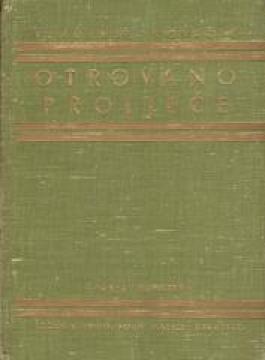
Otrovano proljeće
The first solo collection of poems by Vladimir Kovačić. Intimate and melancholic lyrics in which youthful enthusiasm, love and spring intertwine with feelings of bitterness, disappointment and poisoned youth in a difficult social and personal context.
Vladimir Kovačić (Vinkovci, 1907 – Zagreb, 1959), a Croatian poet, essayist and theatre critic, published the collection Otrovano proljeće in 1938, published by Matica hrvatska. It was his first independent book of poetry, which immediately presented him as a serious and distinctive lyricist.
The collection is imbued with a strong sense of youthful longing, love passion and spring awakening, but at the same time with deep bitterness and disappointment. The title Otrovano proljeće symbolically expresses the fundamental tension of the work: spring as a metaphor for youth, love and hope, but poisoned by reality, social circumstances, internal conflicts and melancholy. Kovačić's poetry combines intimate lyricism with social consciousness, and the lyrical subject is often lonely, vulnerable and torn between ideals and harsh everyday life.
Stylistically, it moves between modern introspection and more traditional romantic tones, with rich images of Slavonian nature, rivers and plains. The poems exude melancholy, sensitivity and refined linguistic music. Critics received the collection positively, highlighting the sincerity and lyrical maturity of the young poet.
Poisoned Spring remains Kovačić's most famous collection and an important part of Croatian interwar lyric poetry. Later, the collections Roads and Apple Trees (1952) and posthumously Amber in the Sun (1959) followed. Today, it is valued as an authentic voice of a generation that experienced disappointment in the interwar period and as a rare, sought-after antiquarian edition of Matica Hrvatska.
One copy is available