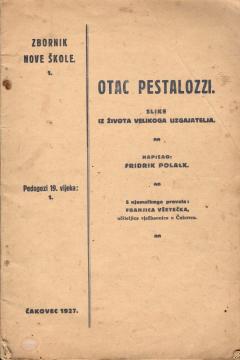
Otac Pestalozzi: slike iz života velikoga uzgajatelja
"Father Pestalozzi" by F. Polack brings a vivid account of the life and work of the famous Swiss pedagogue Johann Heinrich Pestalozzi, a great reformer of education and a pioneer of modern pedagogy.
The book follows the life path of Johann Heinrich Pestalozzi (1746–1827), one of the most influential European educators, through a series of life pictures and narratives. The author depicts his childhood, education, social ideals, and tireless work to improve the situation of poor children. Pestalozzi's attempts to make education accessible to all classes of society, regardless of origin and material circumstances, are particularly emphasized.
The central place in the book is occupied by Pestalozzi's pedagogical ideas, which marked the development of the modern school. He advocated the comprehensive development of man through the harmonious operation of head, heart, and hand, believing that education should not be limited only to the acquisition of knowledge, but must develop moral values, a sense of responsibility, and practical life skills. His educational work was directed toward understanding children's needs, learning through experience, and creating a stimulating environment for personality development.
Polack does not design the book as a strict scientific biography, but as an accessible and inspiring read that presents Pestalozzi's ideals, successes and failures through events from his life. The reader gains insight into the social circumstances of the time, the development of European pedagogy and the emergence of ideas that strongly influenced later educational reforms. Due to its simple style and emphasized educational message, the work was particularly suitable for teachers, students of teacher training schools and all those interested in the history of education.
The book today has value as a historical pedagogical source and testimony to the reception of Pestalozzi's ideas in Croatian education in the first half of the 20th century. It represents an important contribution to the spread of modern pedagogical principles and reminds us of the lasting importance of the humanistic approach to education.
Angeboten wird ein Exemplar