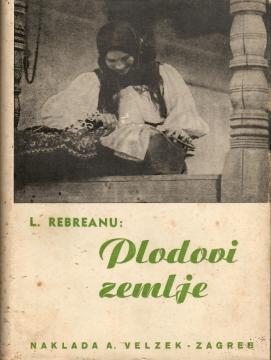
Plodovi zemlje: Knjiga I
A novel by Liviu Rebreanu, considered by many to be the founder of the modern Romanian novel. Ion Glanetaș, an ambitious young peasant in a Transylvanian village, is obsessed with the desire for land. A classic novel about greed and fate.
Fruits of the Land (1920) is a masterpiece by Liviu Rebreanu and one of the most important novels of Romanian and European literature of the 20th century. The novel is a powerful social monograph of the Transylvanian countryside at the beginning of the 20th century.
The main character Ion al Glanetașa, a poor but strong and ambitious young man, is consumed by an insatiable desire for the land. The land becomes his obsession – stronger than love, morality and compassion. Although he deeply loves the beautiful but poor Florica, he decides on a cynical plan: he seduces and rapes Ana, the ugly and timid daughter of the rich peasant Vasilea Baciu, in order to marry her and obtain a large land.
Rebreanu masterfully depicts the peasant world – its passions, conflicts, poverty, relations with the landed gentry and the church, but also the inner dramas of intellectuals (the family of teacher Herdele). The novel is divided into two parts: The Voice of the Earth and The Voice of Love, which show how Ion, after achieving his dream, is still not happy. The earth devours him, and his life turns into a tragedy.
The 1943 edition (especially the three-volume set) is today a sought-after and highly regarded antiquarian edition among lovers of Balkan and Eastern European literature. Fruits of the Earth is a must-read for all who love great realistic novels. The timeless story of a man destroyed by his own ambition. A classic that can be read in one sitting and remains in the memory for a long time.
One copy is available
- Traces of patina