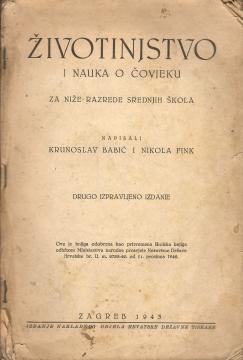
Životinjstvo i nauka o čovjeku
Udžbenik zoologije i antropologije za niže razrede srednje škole. Sadrži sistematski pregled životinjskog sveta i osnove nauke o ljudima, bogato ilustrovan (crno-bele i slike u boji). Klasičan hrvatski školski priručnik iz perioda NDH.
Životinjstvo i nauka o čovjeku je zajedničko delo dva istaknuta hrvatska zoologa: dr Krunoslava Babića (1885–1953), dugogodišnjeg upravnika Zoološkog instituta i muzeja u Zagrebu, i dr Nikole Finka (1901–1975), njegovog saradnika i kasnijeg naslednika na odeljenju. Knjiga je objavljena u Zagrebu od strane Izdavačkog odeljenja Hrvatske državne štamparije, sa prvim izdanjem 1941. godine, a doživela je i kasnija izdanja (npr. 1943. i 1944. godine).
Namenjena je nižim razredima srednjih škola (gimnazijama i sličnim školama) kao udžbenik prirodnih nauka. Sastoji se od dva glavna dela:
- Životinje (Zoologija) – sistematski pregled životinjskog carstva prema tada važećoj sistematici (od jednostavnijih beskičmenjaka do sisara).
- Nauka o čoveku (antropologija i osnovna fiziologija) – opis strukture, funkcija i razvoja ljudskog tela.
Knjiga je izuzetno bogato ilustrovana: sadrži veliki broj crno-belih crteža, fotografija i nekoliko ploča u boji. Ilustracije su bile jedna od njenih glavnih prednosti – jasne su, pedagoški prilagođene i pomagale su učenicima da razumeju morfologiju i sistematiku životinja.
Delo predstavlja jedan od prvih izvorno hrvatskih udžbenika zoologije za srednje škole u modernom smislu. Napisano je jasnim, stručnim, ali pristupačnim jezikom za učenike. Odražava naučni nivo hrvatske zoologije u prvoj polovini 20. veka, sa akcentom na morfologiju, sistematiku i osnovnu fiziologiju. Odeljak o čoveku obuhvata osnove anatomije i fiziologije, sa elementima uporedne anatomije (povezivanje čoveka sa ostatkom životinjskog sveta).
Danas je ovaj udžbenik tražen među starinarima i istoričarima nauke i obrazovanja. Predstavlja važan dokument o nastavi prirodnih nauka u Hrvatskoj tokom Drugog svetskog rata i perioda NDH, i o kontinuitetu hrvatske naučne terminologije u biologiji. Iako su neke sistematske podele i teorije sada zastarele, knjiga zadržava svoju vrednost kao kvalitetan pedagoški materijal svog vremena i svedočanstvo o radu Odseka za zoologiju Univerziteta u Zagrebu.
Jedan primjerak je u ponudi