Diogenes I-II
A historical novel by August Šenoa about political intrigues, personal conflicts, and social conditions in Habsburg Croatia in the mid-18th century. Šenoa's cynical portrayal of the moral decadence of the elite and the struggle for power.
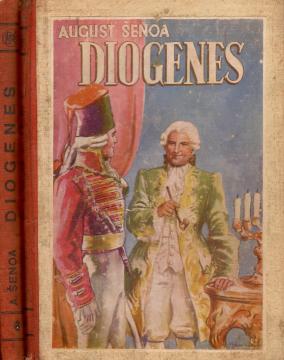
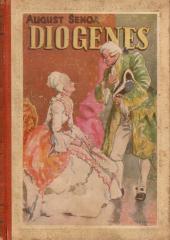
This edition of Diogenes by August Šenoa (1838–1881) constitutes the 5th and 6th books of the Collected Works of the Preporod Publishing House, from the years of 1942/1943. It is an illustrated edition with drawings and covers by the legendary Andrija Maurović, one of the greatest Croatian illustrators and comic book artists of the 20th century. The edition is part of the popular collected opus of Šenoa during the war years, equipped with Maurović's dynamic, expressive drawings that enhance the drama and atmosphere of the 18th century.
The novel was originally published in 1878 as Diogenes: Historička pripoviest XVIII. vieka. It is Šenoa's last completed historical novel and in a way experimental: unlike the grandiose panoramic scenes in The Peasants' Revolt or The Goldsmith's Gold, the action is confined to interiors – the ban's mansion, noble houses, bourgeois salons and private rooms. The dominant form of the novel is dialogical, full of subtle psychological conflicts, intrigues and satirical depictions of society.
The action takes place around the middle of the 18th century in Croatia under Habsburg rule. The central conflict revolves around the influential and ambitious Tereza Baćan (wife of Ban Adam Baćan) and her political and personal intrigues, as well as her conflict with the royal councilor Antun Janković and other noble circles. The novel depicts the decadence of the nobility, corruption, power struggles, love affairs, marital crises and moral decay of high society, but also bright characters who represent honesty, patriotism and civic ethics. The title Diogenes alludes to a cynical, wise observer who, like an ancient philosopher, seeks truth in a world of lies and vanity.
Šenoa masterfully reconstructs the historical atmosphere using authentic documents and figures, but the novel also serves as a critique of contemporary (19th century) Croatian conditions under dualism. Maurović's illustrations – strong, dramatic, with emphasized contrasts – perfectly follow Šenoa's style: they bring characters, costumes, interiors and emotional tensions to life, making this 1942 edition particularly attractive and collectible.
As part of Šenoa's oeuvre, Diogenes shows authorial maturity: less epic, more psychological and socially critical. It is popular for its lively dialogues, humor, and sharpness, and Maurović's contribution makes this edition a visually rich testimony to the Croatian literary and artistic tradition.
The book consists of two volumes.
Jedan višetomni primjerak je u ponudi.
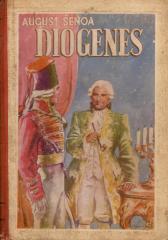
- Worn covers
- Worn covers