Bel-Ami
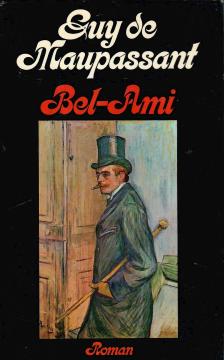
Guy de Maupassant's masterpiece and one of the most important novels of French realism and naturalism. A sharp satire of Parisian society of the Third Republic – corrupt, cynical and obsessed with money and power.
The main character is Georges Duroy, a former non-commissioned officer from Algeria, poor and unscrupulous. He comes to Paris and starts working as a journalist for the newspaper La Vie Française. Thanks to his charm, beauty and complete lack of morality, he uses women to climb the social ladder: first the wife of his colleague Madeleine Forestier, then rich widows and mistresses of influential people. He becomes “Bel-Ami” (beautiful friend) – a nickname given to him by women. Duroy transforms himself into Baron Georges du Roy de Cantel, marries richly and finally triumphs at a wedding in the Madeleine church, a symbol of the hypocrisy of society.
Maupassant masterfully depicts the mechanisms of power: journalism as a tool of propaganda and blackmail, stock market speculation, colonial politics and the moral decay of the elite. The novel is a critique of capitalism and patriarchy – women are tools for advancement, but they themselves use sex for power. Duroy is the archetype of the unscrupulous opportunist who succeeds because society rewards cynicism, not talent or honesty.
The style is classic for Maupassant: clear, precise, without unnecessary embellishments. The descriptions are vivid, the psychology of the characters is deep, and the irony is sharp. The novel is dynamic, full of dialogue and social scenes (salons, offices, brothels). Maupassant, a student of Flaubert, achieves objectivity and ironic distance – he does not condemn Duroy directly, but shows how the system creates such people.
Bel-Ami remains extremely relevant: the criticism of media manipulation, corruption and “ascent without moral restraints” sounds very contemporary. The work has influenced numerous authors and has been adapted several times (films, series).
One copy is available