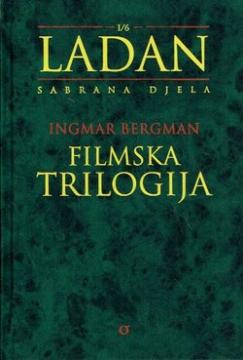
Filmska trilogija

Filmska trilogija

Ingmar Bergman

The artistic creativity of this famous Swedish director, marked primarily by his cinematic expression, also reminded us of the author's writing inclinations with this edition.

It is a written template for a film trilogy - 1. "As in a Mirror" (1961) - Focuses on a young woman (Harriet Andersson) suffering from schizophrenia and her family during a summer vacation on an isolated island. The film explores the border between madness and religious vision. 2. "The Communicants": (1963) - Follows a priest (Gunnar Björnstrand) in a small rural community who experiences a deep crisis of faith as he confronts the silence of God and his own emotional emptiness. 3. "Silence" (1963) - The plot follows two sisters and the son of one of them in a foreign, unknown city on the eve of the outbreak of war. The film deals with the complete breakdown of communication and physical and psychological isolation. All three films are linked by a common question - contemplating the existence of a supreme being or ultimate meaning, or God as absence or presence. Translated from Swedish and written by Tomislav Ladan. In his afterword, he not only analyzes the film's aspects, but also delves deeply into Bergman's metaphysics and the ontological uncertainty of the characters. His translation is considered excellent because it manages to convey the cold, stripped-down atmosphere of Bergman's dialogues and didacticism. Ladan emphasizes that Bergman uses film as a means of exploring "religious issues without religious answers".

Original title
El filmtrilogi
Translation
Tomislav Ladan
Editor
Šimun Bečko
Dimensions
20.5 x 14 cm
Pages
189
Publisher
Medicinska naklada, Zagreb, 2001.
 
Distribution: 2,000 copies
 
Latin alphabet. Hardcover.
Language: Croatian.

One copy is available

Condition:Unused
 

Are you interested in another book? You can search the offer using our search engine or browse books by category.

You may also be interested in these titles

Kako što nastaje: novine, film, teatar

Kako što nastaje: novine, film, teatar

Karel Čapek

In a witty and instructive essay, Čapek describes how a newspaper, a film, and a theater play are created. Through humor and irony, he shows the complexity of the process – from idea to realization – and the different perspectives of the participants, dem

Znanje, 1985.
Croatian. Latin alphabet. Paperback.
4.76
Noć u Kazablanki: Filmska decenija 1991-2001.

Noć u Kazablanki: Filmska decenija 1991-2001.

Milan Vlajčić

In this valuable book by Milan Vlajčić, the cinematic nineties receive their first systematic evaluation. Much more than a mere sum of accumulated texts, it is a corpus with a more than elaborated and profiled concept.

Otkrovenje, 2001.
Serbian. Cyrillic alphabet. Paperback.
9.24
Der König des Kung Fu: Bruce Lee - sein Leben und Kampf

Der König des Kung Fu: Bruce Lee - sein Leben und Kampf

The book presents an intimate and authentic biography of this martial arts legend and film icon. Linda Lee provides personal insight into her husband's life, philosophy, and legacy, giving the book emotional depth and authenticity.

Falken Verlag, 1976.
German. Latin alphabet. Paperback.
9.56
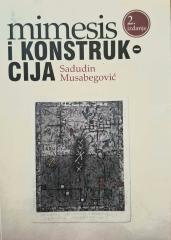
Mimesis i konstrukcija

Mimesis i konstrukcija

Sabudin Musabegović

The book "Mimesis and Construction" (2009) by Sabudin Musabegović deals with the theoretical consideration of art, literature and the way in which meaning is created in the text.

Akademija likovnih umjetnosti, 2009.
Croatian. Latin alphabet. Paperback.
9.85
Scenarij, što i kako

Scenarij, što i kako

Branko Belan

The book is part of the Film Library (book 1) and contains the theoretical foundations of screenwriting work, emphasizing that film is a special art, and the screenwriter is a cultural and social worker.

Epoha, 1960.
Croatian. Latin alphabet. Hardcover with dust jacket.
7.98