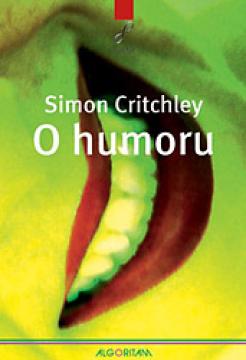
O humoru
Critchley's book explores the philosophical and psychoanalytic meaning of laughter, positioning humor as a fundamental human survival mechanism with which we confront the anxiety and absurdity of everyday life.
In On Humour, British philosopher Simon Critchley offers a profound and witty analysis of the phenomenon of laughter, exploring why we laugh, what it tells us about our place in the world, and how humor helps us cope with our own fragility. The book moves at the intersection of philosophy, literature, and psychoanalysis, drawing on the traditions of thinkers such as Sigmund Freud, Immanuel Kant, and Henri Bergson.
Critchley argues that humor is not just harmless fun, but a radical form of criticism and an essential human need. Laughter is born from the disparity between our lofty ideals and the banal, physical reality in which we live. When our reputation or expectations suddenly collide with mundane reality, the comic effect is created. Unlike cynicism, which passively accepts the state of affairs or tragedy that crushes us in the face of inexorable fate, humor allows us to rise above our own suffering. It provides us with the distance needed to survive in a world that is often disproportionate, unjust, and profoundly absurd.
The author pays special attention to Jewish humor and a specific type of self-mockery that does not humiliate the individual, but liberates him through benevolent irony. Through an accessible but intellectually stimulating style, Critchley proves that humor is a way of coming to terms with our failures and weaknesses. The book is an indispensable read for anyone who wants to understand more deeply the psychological and social power of laughter, reminding us that the ability to laugh at our own misery is also an act of the greatest freedom.
Jedan primjerak je u ponudi