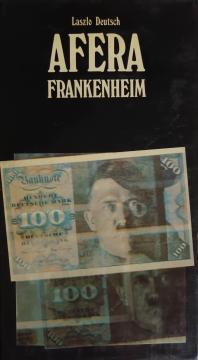
The Frankenheim Affair should acquaint the reader with the way in which the Hitlerian machinery was used for its financial manipulations, how it used a real Jewish bank as a cover for its operations during and after the Second World War.
Original title
L' affaire Frankenheim
Translation
Ladislav Grakalić
Graphics design
Hinko Bohr
Dimensions
22.5 x 12.5 cm
Pages
267
Publisher
Centar za informacije i publicitet (CIP), Zagreb, 1981.
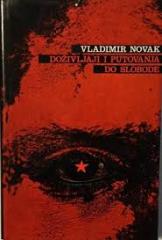
The autobiographical work of Croatian communist activist Vladimir Novak, a survivor of the Ustasha camps, follows his memories of resistance to fascism during World War II.
August Cesarec, 1979.
Croatian. Latin alphabet. Hardcover with dust jacket.
8.26 €
World War II • Croatian history • Yugoslavia
The monograph "Baranja 1941–1945" is the first systematic study of the history of Baranja during World War II. A detailed account of the Hungarian occupation, terror, resistance and liberation of this area.
Historijski institut Slavonije, 1979.
Croatian. Latin alphabet. Hardcover.
9.347.01 - 9.367.02 €
World War II • Yugoslavia • Communism and fascism • Political journalism • Political-historical essays
A non-fiction book by Ante Belja about post-war liquidations, repression by the Yugoslav authorities and the activities of the UDBA, from the perspective of Croatian political emigration.
HIŠAK, 1990.
Croatian. Latin alphabet. Paperback.
12.34 €
Marketing and propaganda • Italian literature • Documents and records • World War II • Communism and fascism
An overview of the history and position of Italian women from antiquity to Mussolini's fascist Italy, with an emphasis on their contribution to society and culture. A popular educational publication from the period of the Independent State of Croatia, wit
Società Editrice di Novissima, 1941.
Croatian. Latin alphabet. Paperback.
13.24 €
Militaria • Historical periodical • World War II • Croatian history • Education
"Hrvatska mladost" — a magazine for high school youth, year XXV, issue 3, one of the first issues published in the Independent State of Croatia, when the magazine became intended for high school students as part of Ustasha propaganda and youth education.
Društvo hrvatskih srednjoškolskih profesora, 1941.
Croatian. Latin alphabet. Paperback.
13.42 €
Documents and records • World War II • Yugoslavia • Post-communism • Jewish history
Jews in Yugoslavia 1944–1952 by Mladenka Ivanković depicts the renewal of the life of the Jewish community after the Holocaust, its relationship with the new authorities, and emigration to Israel and the preservation of identity.