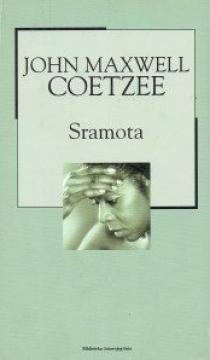
Sramota

Sramota

John Maxwell Coetzee

Shame is a novel by J. M. Coetzee, published in 1999. It won the Booker Prize. The author was awarded the Nobel Prize for Literature four years after its publication.

David, a twice-divorced intellectual, leads a comfortable but emotionally empty life, satisfying his needs through casual relationships, including visits to prostitutes. His life is shattered when he begins an illicit affair with a student, Melanie, which leads to accusations of abuse of power. Refusing to publicly express remorse, David resigns and loses his social status, and retreats to his daughter Lucy's farm, where she lives alone in the Eastern Cape, trying to survive by farming.

On the farm, David and Lucy are brutally attacked by three men, in which Lucy is raped and David is injured. The attack reveals deep social tensions and violence in post-apartheid South Africa, where power relations between whites and blacks are changing. Lucy, despite her trauma, refuses to leave the farm and faces the consequences in her own way, while David struggles to understand her decisions and his own role in a changing world. The novel explores themes of shame, guilt, morality, racism, gender relations, and reconciliation, as David, through volunteering at an animal shelter, begins to question his own values ​​and seek redemption.

Original title
Disgrace
Translation
Petar Vujačić
Dimensions
21 x 13 cm
Pages
221
Publisher
Globus, Zagreb, 2004.
 
Latin alphabet. Hardcover with dust jacket.
Language: Croatian.
ISBN
9-53-716020-3

One copy is available

Condition:Used, excellent condition
 

Are you interested in another book? You can search the offer using our search engine or browse books by category.

You may also be interested in these titles

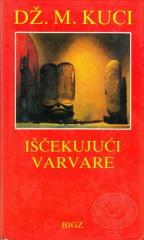
Iščekujući varvare

Iščekujući varvare

John Maxwell Coetzee
BIGZ, 1990.
Serbian. Latin alphabet. Hardcover with dust jacket.
9.99
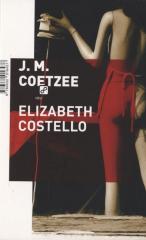
Elizabeth Costello

Elizabeth Costello

John Maxwell Coetzee

Elizabeth tirelessly lectures and gives speeches all over the world. Although it is not entirely clear in this work where fiction ends and fiction begins, the character of Elizabeth is a metaphor for a writer who does not write but gives formal speeches.

VBZ, 2007.
Croatian. Latin alphabet. Hardcover.
5.283.96
Dijalektika prijelaznog perioda

Dijalektika prijelaznog perioda

Viktor Pelevin

The book represents the author's anthology - the largest part is the novel Čisla (Čisla), followed by the short story Macedonian Criticism of French Thought and several short stories (Odin vog, Akiko, Fokus-grupa, Gost na prazniku bon).

Disput, 2006.
Croatian. Latin alphabet. Paperback.
9.68
Sasvim obične besmislice

Sasvim obične besmislice

Daniil Harms

Ignored and harassed by the authorities, surviving on the help of relatives and publishing children's rhymes, this ingenious marginal left behind a veritable treasure trove of strange stories and twisted thoughts in his notes and notebooks.

Šareni dućan, 1999.
Croatian. Latin alphabet. Paperback.
10.147.61
Melanholija 1-2

Melanholija 1-2

Jun Fose

Combining historical facts with fiction, the author draws us deep into the world of the artist's thin soul, whose vulnerability is caused by his tragic end, but who also possesses an incredible gift to see the divine beauty of the world where others would

Blum izdavaštvo, 1995.
Serbian. Latin alphabet. Paperback.
12.268.58
Štefica Cvek u raljama života

Štefica Cvek u raljama života

Dubravka Ugrešić

Do you like "lovelies"? Whatever you think about them, you'll enjoy this superb pastiche of trivial romance novels.

Mladinska knjiga, 1990.
Croatian. Latin alphabet. Hardcover with dust jacket.
4.94