Dunja u kovčegu

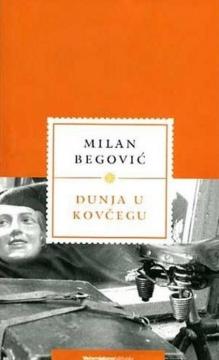
Dunja u kovčegu

Milan Begović

Milan Begović's first novel and one of the most lyrical novels in Croatian literature. A romantic story about the passionate but tragic love between the refined bon vivant Dušan and the fragile, naive Rođena (Dunja) in a patriarchal Dalmatian setting.

Milan Begović published the novel Dunja u kovčegu in 1921. The work is considered his first novel and a masterpiece of Croatian lyrical prose. Critics have often called it the "best lyrical novel" in Croatian literature.

The novel is set in the Dalmatian landscape and follows the passionate love between two completely opposite characters: the sophisticated, worldly Dušan and the young, gentle, almost childish Rođena (Dunja). Begović masterfully combines romantic passion with modern psychological analysis, depicting the conflict between illusion and reality, passion and everyday life, and the impossibility of complete closeness between two different worlds.

The novel's special value lies in its distinctly lyrical atmosphere. Begović uses rich, poetic language, fine psychological nuances, and impressive descriptions of nature that become a mirror of the characters' inner states. The novel is innovative in form - it is less a classical plot and more a poetic-psychological study of love, longing, and loss.

The work exudes nostalgic, melancholic tones and a deep understanding of the human soul. In it, Begović combines elements of Dalmatian folklore, Mediterranean sensuality and modern European literature.

Quinja u kovčegu remains one of the most poetic and widely read works of Croatian prose of the 20th century, and many consider it Begović's most successful prose achievement. Today, it is appreciated as the pinnacle of the Croatian lyric novel and an important bridge between tradition and modernism in our literature.

Editor
Branka Primorac, Seid Serdarević
Illustrations
Stanko Abadžić
Graphics design
Vanja Cuculić
Dimensions
21 x 13 cm
Pages
187
Publisher
Večernji list, Zagreb, 2004.
 
Latin alphabet. Hardcover with dust jacket.
Language: Croatian.
ISBN
978-9-53716-103-3

Multiple copies are available

Copy number 1

Condition:Used, excellent condition

Copy number 2

Condition:Used, excellent condition

Copy number 3

Condition:Used, excellent condition

Copy number 4

Condition:Used, excellent condition
 

Are you interested in another book? You can search the offer using our search engine or browse books by category.

You may also be interested in these titles

Kritike i prikazi

Kritike i prikazi

Milan Begović

A collection of literary, theater, and art criticism by Milan Begović. It contains his reviews of performances at the Croatian National Theater, essays on drama, literature, and art, written with elegance and wit.

Hrvatski izdavalački bibliografski zavod (HIBZ), 1943.
Croatian. Latin alphabet. Hardcover.
9.99
Giga Barićeva 1-3

Giga Barićeva 1-3

Milan Begović

Giga Barićeva (1940) follows the life of Zagreb's bourgeois society during and after World War I. Begović's style, imbued with impressionism and wit, creates a panorama of society, while Giga personifies the struggle between freedom and expectations.

Zora, 1965.
Croatian. Latin alphabet. Hardcover with dust jacket.
The book consists of 3 volumes
26.16
Ne traži me u sebi

Ne traži me u sebi

Ana Žube

"Don't Look for Me Within You" is a classic romance novel ("ljubić") in the spirit of popular trivial literature in 1980s Yugoslavia. An interesting example of the popular culture of socialism and the construction of female identity in trivial literature.

NIRO Književne novine, 1985.
Croatian. Latin alphabet. Paperback.
4.26
Gladno brdo

Gladno brdo

Daphne Du Maurier

Hungry Hill (1943) is a saga of five generations of the Anglo-Irish Brodrick family, owners of Clonmere Castle in Ireland. Du Maurier, a master of Gothic prose, weaves together folklore, curses, and social change, showing how greed destroys heirs.

Nakladni zavod Matice hrvatske, 1977.
Croatian. Latin alphabet. Hardcover with dust jacket.
5.32
Romeo, Julija i tama

Romeo, Julija i tama

Jan Otčenášek

In occupied Prague in 1942, the student Pavel hides the wounded Jewish woman Hana. In danger and fear, a strong love is born between them. The Gestapo discovers them, Pavel dies tortured under investigation, and Hana survives the Holocaust carrying the me

Svjetlost, 1965.
Serbian. Latin alphabet. Paperback.
3.26
Tajna ljubav

Tajna ljubav

Stephanie Laurens

The fifth installment in the famous Cynster family saga, a romantic thriller set in 1820s London. Stephanie Laurens combines adventure, secrets and steamy scenes in a story of forbidden attraction between childhood friends who become lovers.

Znanje, 2019.
Croatian. Latin alphabet. Paperback.
3.42