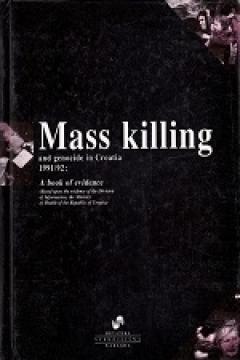
Mass killing and genocide in Croatia 1991/92
One copy is available

One copy is available
Are you interested in another book? You can search the offer using our search engine or browse books by category.
Josip Mihaljević's book analyzes the relationship between the government and the individual in communist Croatia (1958–1972), through repressive mechanisms, ideological pressures, and restrictions on personal freedom in the socialist system.
One of the most prominent Croatian cultural historians, Josip Horvat, in one of his best texts, not only describes the cultural achievements of Croats, but also analyzes them on the basis of political, social and other events that Croatian history is full
The book represents a novelty not only in Istrian, but also in Croatian historiography. Namely, the clothing culture in the region of Istria in the early modern period has not yet been analyzed at all, and for the region of Dalmatia only sporadically.
The generation to which Konstantinović belonged managed to reach an agreement and, had it not been for the Second World War, was on the threshold of establishing liberal democracy in Yugoslavia, whose supporter Konstantinović was.
The collection brings together scholarly works on key political, legal, and diplomatic processes that led to the creation of the Croatian state in 1991, analyzing the decisions, actors, and international circumstances crucial to independence.
Probably every historian sometimes feels the need to fantasize about the people they write about, to try to immerse themselves in the times that are the subject of their scientific research.