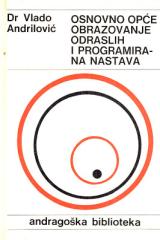
Rare books
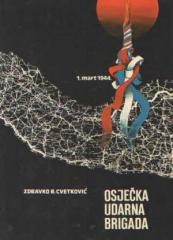
Osječka NOU brigada
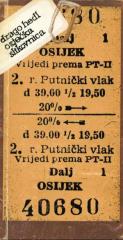
Osječka slikovnica
Drago Hedl’s *Osijek Picture Book* is a collection of newspaper essays and urban sketches about Osijek, its people, its streets, and everyday life. It is a witty and nostalgic chronicle of the city, its customs, and its changes.
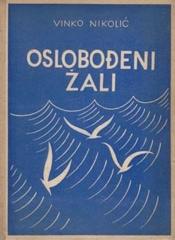
Oslobođeni žali
One of the most significant collections of Croatian poetry from the period of World War II. The poems bring intimate, nostalgic and patriotic lyrics imbued with motifs of homeland, sea, mother, faith and liberation from the burden of the past.
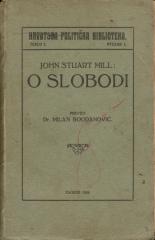
O slobodi

The founder of modern liberalism, John Stuart Mill, in his essay "On Liberty" defends individual freedom from social and state pressure, setting limits on power over the individual and advocating freedom of thought, speech, and action.
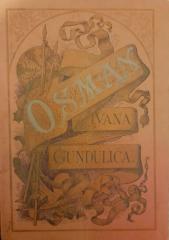
Osman
Ivan Gundulić: Osman, a romantic epic in 20 cantos. The greatest work of Croatian Baroque literature about the conflict between Christianity and Islam, freedom and tyranny, with Mažuranić's cantos of the 14th and 15th cantos.
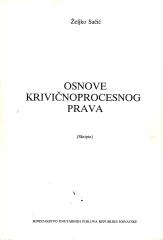
Osnove krivičnoprocesnog prava (Skripta)
The book is a concise and practical manual intended primarily for students and police officers. Given the time of publication, the script reflects the legal framework of the time, but still provides fundamental insights into the structure and logic of cri
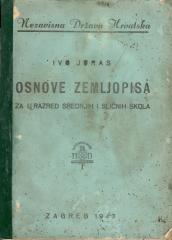
Osnove zemljopisa za I. razred srednjih i sličnih škola
A general geography textbook intended for the first grade of secondary schools in the Independent State of Croatia. Contains the basics of physical and general geography, maps and illustrations. The work of the prominent Croatian geographer and pedagogue

Osnovi radiofonije – zbirka pokusa
A practical manual with a series of simple experiments in radiophony and the basics of radio technique. Intended for students, teachers and amateurs.