
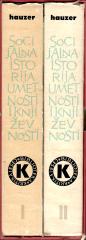
Filozofija povijesti umjetnosti
No copies available
The last copy was sold recently.
No copies available
The last copy was sold recently.
Are you interested in another book? You can search the offer using our search engine or browse books by category.
First published in 1951 Arnold Hausers commanding work presents an account of the development and meaning of art from its origins in the Stone Age through to the Film Age.
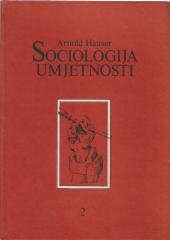
Along with the traditional (old) disciplines that deal ex professo with the world of art - aesthetics, poetics, theory and philosophy of art - the discipline of sociology of art has emerged and developed strongly, especially in our century.
What you have before you is not an ordinary collection – it is a vibrant, multidisciplinary map of a specific intellectual and artistic world: 20th-century Zagreb culture, seen through the prism of "Luddism" as a key, programmatic category.
The collection brings together papers from a scientific conference dedicated to the work of Prof. Sadudin Musabegović, a prominent aesthetician and art theorist. Through various approaches, the authors explore the relationship between art, painting, socie
Milan Pelc's scholarly study explores the role of illustrated leaflets and 17th-century graphics. Through the analysis of visual media, religious, political, and social processes of the early modern era are revealed.
*Public Opinion / Art and the Crowd* is a Croatian translation of two shorter studies by the Italian sociologist, criminologist, and publicist Scipio Sighele (1868–1913), one of the pioneers of crowd psychology and collective psychology.