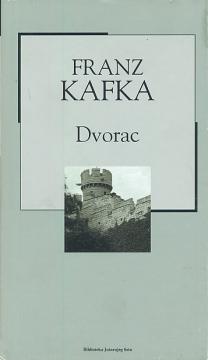
The Castle is Franz Kafka's last novel. In it, the protagonist known only as "K." he arrives in the village and struggles to gain access to the mysterious authorities who rule it from a castle supposedly owned by Count Westwest.
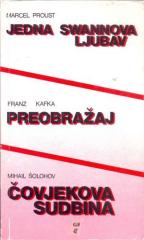
The Process is a novel by Franz Kafka, written between 1914 and 1915 and published in 1925. The transformation is a short story by Franz Kafka, first published in 1915, and certainly his most famous work, along with the novels The Process and The Castle.
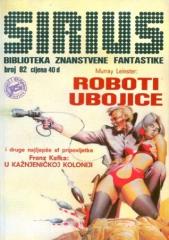
Murray Leinster, Damir Bajs, Miroslav Bošnjaković, Rastislav Durman, Krunoslav Gernhard, Jakob Z....
Sirius was a Croatian science fiction magazine. The foundation was proposed by Damir Mikuličić in 1976. In Sirius, the works of domestic authors, as well as translations of foreign SF authors, were published. It was published from 1976 to 1989.
Vjesnik, 1983.
Croatian. Latin alphabet. Paperback.
3.46 - 3.48 €
Humor and Satire • Poems in prose • Novel • Russian literature
Venedikt Yerofeyev's postmodern prose poem is today considered a classic of new Russian literature. It is compared to Gogol and Kharms for its poetics of absurdity, satire, and metaphysical depth.
LOM, 217.
Serbian. Cyrillic alphabet. Paperback.
11.24 €
A philosophical novel • Novel • Social literature • Czech literature
Jaromil, a young poet raised by a possessive mother, seeks a "real life" in poetry and revolution. His lyrical youth, love, and idealism lead him into conformity and betrayal of intimate relationships – he dies young and unfulfilled.
Znanje, 1979.
Croatian. Latin alphabet. Hardcover with dust jacket.
You'll See When You Grow Up by Luce Kozine is a striking collection of stories that, from a child's perspective, speaks about the traumas of growing up, the hypocrisy of adults, and the hope that can still save us.
Fraktura, 2024.
Croatian. Latin alphabet. Hardcover with dust jacket.
14.54 €
Francuska književnost • Novel • Social literature • School reading
Uncle Goriot is one of the most famous and important novels by Honoré de Balzac, published in 1835. It is part of his vast cycle The Human Comedy (La Comédie humaine), and is considered perhaps the most successful work in that cycle.