Žensko tradicijsko češljanje i oglavlja Đakovštine (izložba)

Žensko tradicijsko češljanje i oglavlja Đakovštine (izložba)

Branka Uzelac

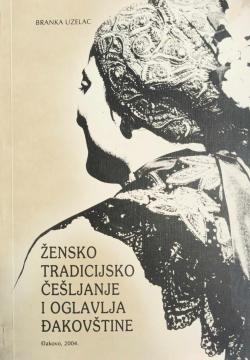
In December 2004, the Museum of Đakovo in Đakovo prepared an exhibition and an accompanying catalog with themes from the ethnographic heritage of Đakovo.

The Museum's senior curator and ethnologist Branka Uzelac is the author of expert texts on traditional women's combing and headdresses in Đakovo. She described the features of girls' combing, headdresses of married women and headdresses of queens or queens along with girls' traditional visits to the Spirits. Attached is a description of the workshop of traditional combing with the name "Pletenico, divojačka diko, a, shamijo, vrag te nadario!", held as part of the Đakovo embroidery program in 2004. The aim of the workshop was to preserve the skills of traditional intangible heritage. The catalog is richly illustrated with color reproductions, and contains a summary in English and a list of the literature used.

Translation
Dragana Matković
Editor
Dražen Bota
Illustrations
Dražen Bota
Dimensions
23 x 16 cm
Pages
29
Publisher
Muzej Đakovštine, Đakovo, 2004.
 
Distribution: 300 copies
 
Latin alphabet. Paperback.
Language: Croatian.
ISBN
9-53-712807-5

No copies available

The last copy was sold recently.
 

Are you interested in another book? You can search the offer using our search engine or browse books by category.

You may also be interested in these titles

Na vratima Požeške doline

Na vratima Požeške doline

Dragutin Pavličević

A classic of local historiography, it depicts the history, geography and culture of the Požega Valley from prehistoric times to the modern era. The work describes the region's strategic position, the influences of the Romans, Ottomans and Habsburgs, with

Matica hrvatska, 1961.
Croatian. Latin alphabet. Paperback.
12.36
Izabrani radovi

Izabrani radovi

Ljubo Boban

Selected Works of Academician Ljubo Boban (2022) brings together key texts on contemporary Croatian history of the 20th century. The foreword by Damir Agičić highlights Boban's methodological rigor and objectivity in researching sensitive topics.

Srednja Europa, 2022.
Croatian. Latin alphabet. Hardcover.
24.52
Dan kada je nastala država Hrvatska 1991.

Dan kada je nastala država Hrvatska 1991.

Davorin Rudolf, Vladimir Šeks, Jasna Omejec

The collection brings together scholarly works on key political, legal, and diplomatic processes that led to the creation of the Croatian state in 1991, analyzing the decisions, actors, and international circumstances crucial to independence.

Hrvatska akademija znanosti i umjetnosti (HAZU), 2015.
Croatian. Latin alphabet. Paperback.
17.26
Knezovi, kraljevi, biskupi

Knezovi, kraljevi, biskupi

Neven Budak

Probably every historian sometimes feels the need to fantasize about the people they write about, to try to immerse themselves in the times that are the subject of their scientific research.

Slobodna Dalmacija, 2005.
Croatian. Latin alphabet. Paperback.
6.004.80
Povijest i kultura Hrvata kroz 1000 godina: Od velikih seoba do XVIII. stoljeća

Povijest i kultura Hrvata kroz 1000 godina: Od velikih seoba do XVIII. stoljeća

Horvat
Josip Horvat

One of the most prominent Croatian cultural historians, Josip Horvat, in one of his best texts, not only describes the cultural achievements of Croats, but also analyzes them on the basis of political, social and other events that Croatian history is full

Knjigotisak d. o. o., 2009.
Croatian. Latin alphabet. Hardcover.
12.209.15
U modi: Kultura odijevanja porečkih plemenitih građana (1650.-1720.)

U modi: Kultura odijevanja porečkih plemenitih građana (1650.-1720.)

Elena Uljančić

The book represents a novelty not only in Istrian, but also in Croatian historiography. Namely, the clothing culture in the region of Istria in the early modern period has not yet been analyzed at all, and for the region of Dalmatia only sporadically.

Srednja Europa, 2019.
Croatian. Latin alphabet. Hardcover.
16.99