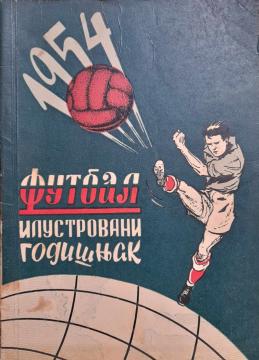
Sergije Lukač, Koja Paljić, Ljubiša Nišavić, Mile Kos, Branko Daleore wrote in this issue: reports from the World Football Championship, all national team matches, review of the first and second federal leagues, European championships...
Through travelogues and personal accounts, Jasen Boko describes South America – a continent of contrasts, passion and unrest. Combining history, culture and personal reflections, he searches for what it means to be “at home” in the world.
V.B.Z, 2006.
Croatian. Latin alphabet. Paperback.
11.22 €
Yugoslavia • History of the Balkans • Interviews • Monographs
Sadik Salimović's Book of Srebrenica (2002) is a memoir of the city: from Ottoman settlement, Islamization and development to the war suffering of 1992–1995 and genocide. It preserves the identity and memory of life before and after the tragedy.
Skupština opštine Srebrenica, 2002.
Croatian. Latin alphabet. Paperback.
11.32 €
Yugoslavia • Interviews • Documents and records • Political journalism
The book Good people in the time of evil (1999) by Svetlana Broz is a collection of true stories from the war in Bosnia and Herzegovina (1992-1995), which bear witness to the humanity, solidarity and moral courage of individuals in the midst of conflict.
Media centar "Prelom", 2001.
Croatian. Latin alphabet. Paperback.
12.369.89 €
Croatian history • Interviews • World War II • Political-historical essays • Monographs • Croatian literature
"In Zlopolje" by Dragutin Grgurević tells the story of the operations of the Third Dalmatian National Liberation Strike Brigade during the NOB. The book is small in format, but of great importance for understanding the local aspects of the NOB.
Narodna armija, 1971.
Croatian. Latin alphabet. Hardcover.
6.364.77 €
Interviews • Autobiographies and Memoirs • Contemporary philosophy • Political philosophy
A book of interviews in which Kołakowski retrospectively describes his life and intellectual journey through the turbulent 20th century – from pre-war Poland, through Nazi occupation, Stalinism, revisionist Marxism, to exile in the West.
In one of the last interviews, from 1969, Giuseppe Cardillo talks to Pier Paolo Pasolini, director of cult films such as Salo or 120 days of Sodom and Decameron, writer, poet and one of the most important intellectuals of Italy in the 20th century