Croatian literature • History of literature
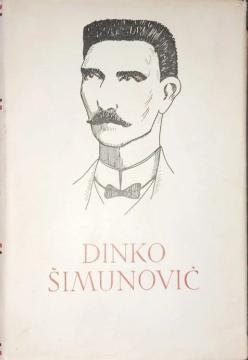
Pet stoljeća hrvatske književnosti: Dinko Šimunović
Five centuries of Croatian literature: Dinko Šimunović, vol. 70. Stories - In the mountains - Young days - The Vinčić family. Prepared by Vice Zaninović.
Editor
Marin Franičević
Dimensions
20.5 x 13 cm
Pages
488
Publisher
Zora, Matica hrvatska, Zagreb, 1965.
Latin alphabet. Hardcover with dust jacket.
Language: Croatian.
One copy is available
Condition:Used, good condition (visible signs of use)
Seven short, independent stories in the "pocket crime novel" format by the master of Croatian crime fiction: fast, tense, concise, with unexpected twists and Pavličić's typical blend of everyday life and crime.
Narodna knjiga, 1984.
Croatian. Latin alphabet. Paperback.
4.26 €
Essays and diaries • Croatian literature • Autobiographies and Memoirs
Vladimir Devidé, a Croatian mathematician, Japanologist and essayist, creates an intimate, fragmentary autobiography in Anti-Diary of Recollections through around twenty texts – essays, stories, humorous and satirical articles, travelogues, reflections an
Znanje, 1995.
Croatian. Latin alphabet. Paperback.
11.26 €
Literature for children • School reading • Croatian literature • School reading
Enemy Number 1 is an exciting story of children's friendship, resourcefulness, and adventures in the fight against injustice. This classic of children's literature is ideal for young readers who enjoy warm, educational, and adventurous stories.
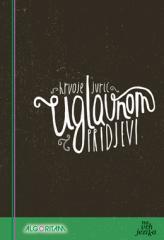
Jergović's stories ironically depict a childhood and an upbringing. The only reality of this autobiographical prose is moving from place to place and from country to country. Strength and beauty are found in the subtle threads with which he weaves his ima
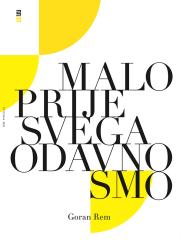
A Little Before Everything, Long Ago We Are is the eleventh collection of poetry by Goran Rem (b. 1958, Osijek), a poet, essayist, literary historian, and member of the Quorum generation in Croatian literature.
MeandarMedia, 2024.
Croatian. Latin alphabet. Paperback with dust jacket.
The title poem, "The Black Rabbit," represents a kind of symbolist maneuver within "real" poetry, because like Baudelaire's "Albatross," it possesses a pronounced unambiguous charge.